
Websites for home service contractors that load fast, work on a phone, and turn a homeowner standing next to the broken thing into a booked job.
A homeowner does not open your website to admire it. They arrive carrying a problem. Water pooling under the water heater. A chimney that smells like smoke on the first cold night. A length of gutter hanging off the fascia after a storm. They have four tabs open and yours is one of them, and inside ninety seconds they decide whether you are worth calling.
That is a sales conversation, and right now your website is the one having it. It has to say what you do, confirm that you cover their town, explain what happens after they reach out, and give them a reason to trust you inside their home. Most contractor sites answer the first of those and stop. We build the site to carry the whole conversation.
Your phone gets answered Monday through Saturday, 9am to 8pm. Those are real hours run by real people and no contractor should apologize for them. Homeowners, though, do not schedule their emergencies around your office. The furnace quits on a Sunday night. The dryer vent backs up after the kids are in bed. The dining room floor buckles over a holiday weekend. The searching happens anyway.
A website is the one member of your team who never clocks out. At eleven at night it can qualify the visitor, explain what you handle and what you do not, set expectations about scheduling, and capture the request before the homeowner keeps shopping. They go to bed having already picked you. You wake up with a name, a phone number and the reason they called already sitting in your pipeline.
That is the difference between a website that costs you money every month and one that earns its keep overnight.
Because most of them were built by somebody who asked for a list of services and a logo file. What comes back is a digital brochure. A photo slider, six icons, a paragraph about being family owned since a certain year, and a contact form at the bottom of every page. Nothing about it is wrong. It simply is not selling anything.
A brochure lists. A salesperson asks. Our seven step sales framework, Solution Based Questions and NEPQ all rest on the same idea: you get further by understanding the problem than by announcing yourself. A page written that way opens with the homeowner situation, names the thing they are quietly worried about, and only then explains how you handle it. Zig Ziglar posture translated to a screen means calm, useful and unhurried. You are not begging for the click.
Stop Selling. Start Solving. That is the mission of this company and it is also the outline every page we write follows.
Think about where the search actually happens. Your customer is in a crawlspace with a flashlight in one hand, or in a driveway looking up at a gutter. One thumb, one bar of signal and very little patience. If your home page takes eight seconds to paint, they are gone before they learn your name. If your phone number sits behind two taps of a menu, they call whoever is easier to call.
We build mobile first, which means the phone layout is designed first and the desktop version follows, not the other way around. Tap targets are big. The number is one tap. Photos are sized and compressed rather than dropped in straight off a camera. Elementor builds quick pages when somebody actually controls what loads on them, and controlling that is part of the job.
Speed is not a vanity metric. It decides whether you are reachable at the moment your customer decides to reach out.
Three steps. You stay in the truck. We handle the rest.
Before anything gets designed we map how you actually win work. Which jobs you want more of, which ones you would rather pass on, and what you say on the phone that makes a nervous homeowner relax. That conversation becomes the outline of the site.
Copy comes first and design second, because a beautiful page with nothing to say converts nobody. Then it gets built on WordPress and Elementor, mobile first, structured so search engines and answer engines can read it. Rank Math and Search Atlas handle the technical and content side so the site is findable, not merely finished.
Every form, call button and chat lands in WeekendCRM, our white labelled build of GoHighLevel. The lead gets an immediate reply, you get a notification, and the request shows up on a pipeline instead of sitting unread in a shared inbox all weekend.
No padded page count and no template dropped on you unchanged. Here is what the work covers.
Every page is written before it is designed, using the same questioning method we teach contractors to use on an appointment. Service pages explain what the job involves and what happens next, in the words homeowners actually type.
Designed for the phone screen first, then widened for desktop. Large tap targets, a one tap phone number, compressed images, and a call to action that is never three screens down.
Clean heading order, question formatted sections, FAQ blocks and schema markup so Google and the AI assistants people now ask can pull a straight answer off your page. Handled with Rank Math and Search Atlas.
Contact forms, quote requests and call buttons route into WeekendCRM. The contact is created on arrival, an automatic reply goes out, and the request appears on a pipeline you can open any time.
A page for each service you want more of, rather than one page listing everything you have ever done. That is what lets a homeowner searching for one repair land on a page about that repair.
Built on WordPress and Elementor, so you are not locked inside a builder nobody else can touch. Add a service, a county or a truck, and the site follows without starting over.
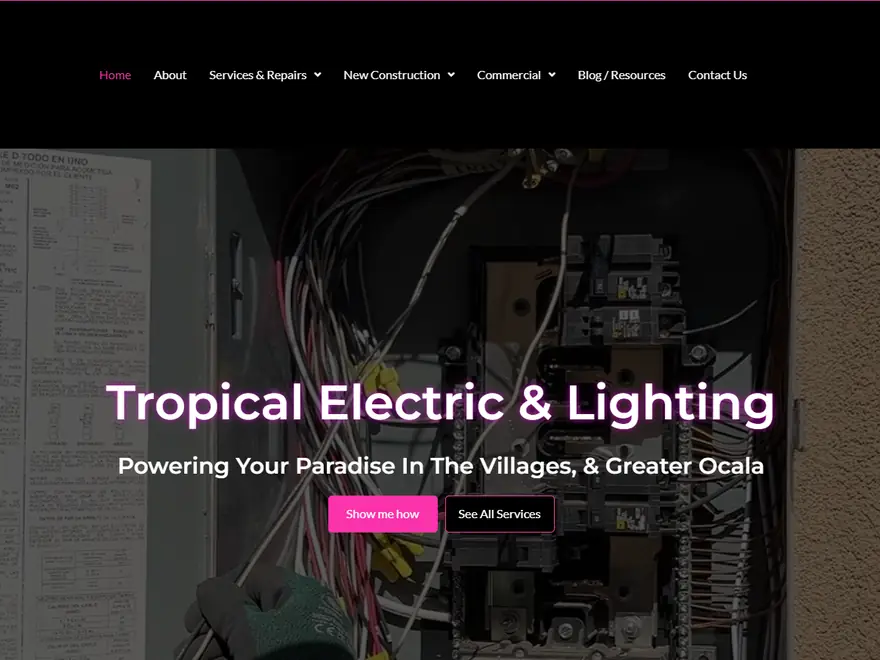
Real client websites. Click any one to open it in a new tab and judge it the way a homeowner would.
Rebrand, new site, redirects mapped.
Two buyers, one site.
Full site structure and redirect map.
On most contractor websites the honest answer is an email address that forwards to whoever set the thing up four years ago. The message lands between invoices, spam and supplier newsletters. On a busy Friday nobody opens that inbox until Monday, and by Monday the homeowner has booked the company that answered in ten minutes.
We route every form, click to call and chat into WeekendCRM, the white labelled GoHighLevel platform we run for clients. The contact is created the moment it arrives. An automatic reply goes out so the homeowner knows a human is coming. The request lands on a pipeline you can open, which means you can see how many leads came in this week and what happened to each one.
That last part matters more than most contractors expect. You cannot fix what you cannot count, and an inbox counts nothing. If you want the follow up run for you as well, lead engagement and custom CRM are services in their own right.
Here is the uncomfortable part, and we would rather say it on a web page than on an invoice. A contractor can spend real money on a new website, launch it, and be standing in the same place ninety days later. The design changed. Nothing else did. Leads still landed in an inbox. Nobody called them back the same day.
A website is one part of a working system. It sits next to search visibility, paid traffic, follow up and the way the phone gets answered on a Saturday. Improve one and the others still set the ceiling. That is why we look at the whole path before quoting a rebuild, and why some contractors are better served by the Full Stack than by a site on its own.
If the site really is all you need, we will build the site. We will also tell you plainly what else is holding the number down, before you spend.
HVAC companies. Chimney sweeps and fireplace shops. Flooring installers. Gutter contractors. Power washing crews. Commercial cleaning companies. The adjacent home service trades that live and die by booked appointments. If your revenue depends on a homeowner or a facility manager choosing you over the next name on the list, this page is written for you.
We work out of Hawthorne and Ocala in North Central Florida and we serve clients across the United States. Always Fire and Gas, formerly Always A Sweep, is a client whose complete rebrand we handled. That is the kind of work we take on when the website is only one piece of what has to change. If your name and your look need attention too, start at branding.
Website development is available by itself. It is also part of the Full Stack, which is $4,995 per month on a twelve month agreement that renews for a further twelve months. We onboard two new clients per month, so there is a waitlist. You can see everything we run on the services page, including SEO and ad management. Shawn also runs the Legacy Builders Mastermind, an accountability group for small business owners.
Website development is quoted per project, because a four page site for a one truck operation and a thirty page site for a company covering six counties are not the same build. You get the number after one conversation about what the site has to do. If you would rather have the site, the search work, the ads and the follow up under one monthly figure, the Full Stack is $4,995 per month on a twelve month agreement.
It depends on how many service pages you need and how quickly we get photos, answers and access from you, which is usually the real variable. You get a schedule before work starts. Because we onboard two new clients per month, your start date also depends on the waitlist.
Sometimes the site is fine and it is simply invisible, in which case SEO is the cheaper first move. Sometimes the traffic is already arriving and the page is talking about the wrong things, in which case new copy fixes more than new rankings would. We look at both before recommending either, and we will say so if you do not need a rebuild.
Yes, because we design the phone layout first and expand it for desktop afterward. Most homeowners find you on a phone while standing next to whatever is broken, so the phone version is the real website. Tap targets are large and your number is always one tap away.
WordPress with Elementor, managed with Rank Math and Search Atlas on the search side. Forms and calls connect to WeekendCRM, our white labelled build of GoHighLevel. WordPress means your site is not trapped inside a proprietary builder, and Elementor means small edits do not require a developer every time.
They go into WeekendCRM, not an email inbox. The contact is created as soon as the form is submitted, an automatic reply goes out to the homeowner, and the request appears on a pipeline you can review at any time. That way you can count your leads and see what happened to each one instead of guessing.
Leave it alone and the pattern holds. Homeowners in your service area keep searching at night, keep landing on a page that loads slowly and says very little, and keep calling the company whose site answered them. You keep paying to host a brochure and blaming a thin month on the weather.
Change it and the pattern changes with it. The phone rings from people who already read what you do, already know you cover their town and already decided before they dialed. Your crews stay busy through the weeks that used to be quiet. You stop chasing work and start choosing it.

Or reach us directly at (352) 612-3327 and service@liftinglegacies.com. We answer Monday through Saturday, 9am to 8pm.
Legacy Sales Engineering is the trade name of Derrick Ventures LLC, owned and run by Shawn Derrick out of Hawthorne and Ocala, Florida, serving home service contractors across the United States. Stop Selling. Start Solving.