
Training for contractors and home service businesses
Contractor sales training: which program fits?
You are not here to be sold the biggest program. You are here to work out which one fixes the thing that is actually costing you signed work. Read the three tracks below, or let us tell you on a call.
No cost, no pressure, and you keep whatever we find. Or call (352) 612-3327 and ask for Shawn.
Legacy Sales Engineering runs three sales training programs for contractors: team training for a crew that quotes work, one-on-one coaching for a single seller, and keynote sessions for events. All three teach the same Solution Based Questions methodology, built by founder Shawn Derrick over 25 years of selling at the kitchen table. We deliver them virtually or in person, to contractors in all 50 states. Start with a free evaluation.
Three ways to train, one methodology
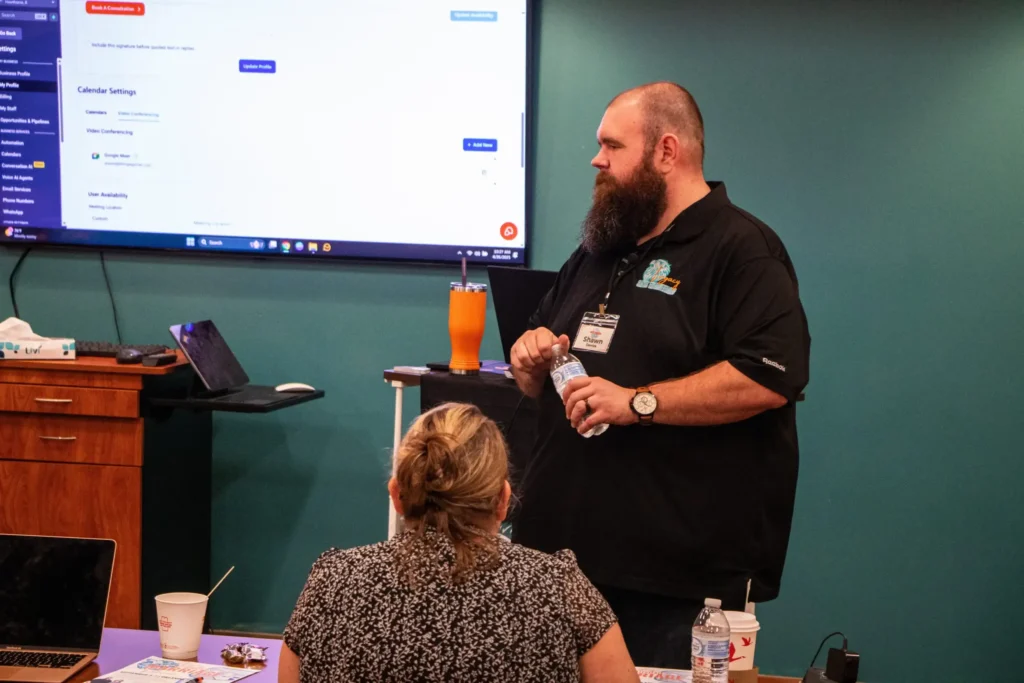
The delivery changes. The framework underneath it does not. Pick by the shape of your problem, not by the size of the program, and if two of them look right, start with the smaller one.
An owner with several estimators has a consistency problem. A single seller has a precision problem, where the process is mostly sound and the money is stuck in two or three moments. A room at an event has a time problem. Same questions, three different deliveries.
Every program gets rebuilt in the language of your trade, so your people leave with questions written for the jobs they are running tomorrow instead of a script they have to translate on the fly. Two trade versions already exist: HVAC comfort advisor sales training and roofing sales training.
Which program fits your situation?
Read these three the way you would read a diagnosis. The one that describes your week is where to start.
Team sales training
Your crew already knows the trade. Team training hands everyone the same sequence to run on every call, written in the words of the work you sell, then drills it until it holds up on a bad day. We ask the owner to sit in.
One-on-one coaching
Direct work on your real consultations. How you open, what you ask, the exact moment you lose the room, and what you say when someone needs to think about it. We start from your last handful of calls.
Keynote and event sessions
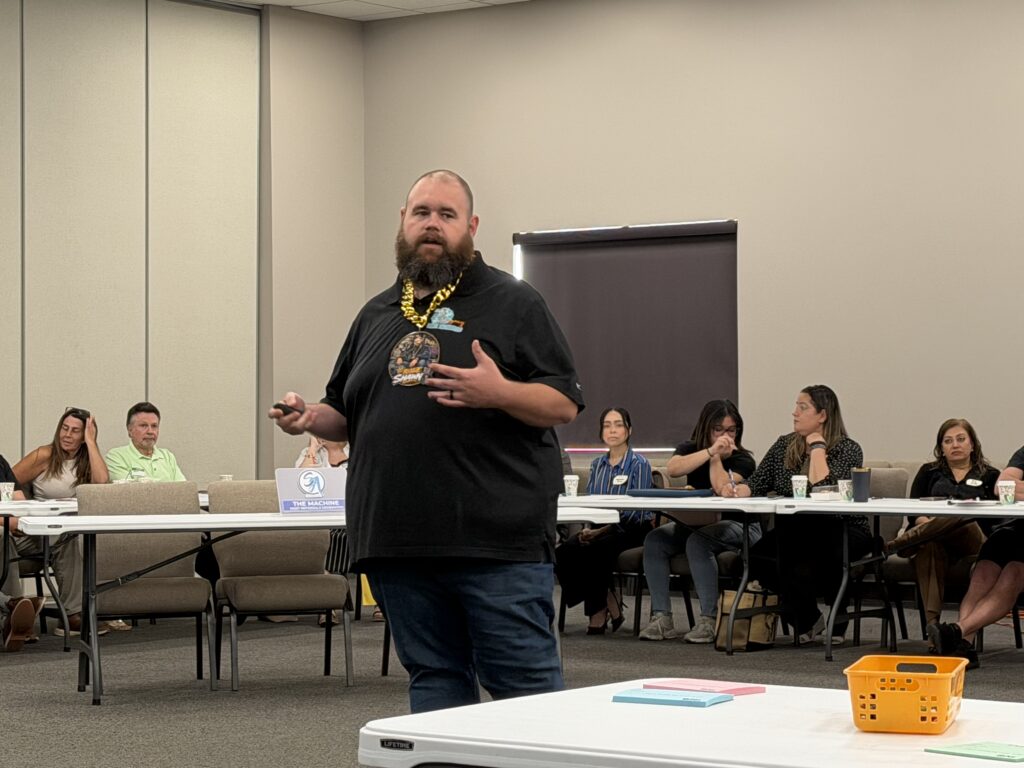
A room of contractors gets a working session, not a highlight reel. Shawn cuts the same framework to the slot you have, so people leave holding questions they can ask on the next call. Chapter meeting, association event, or a company sales day.
Why does it matter who teaches this?
Shawn Derrick did not build this in a classroom. He built it over 25 years of selling directly to homeowners, in kitchens and living rooms and driveways. That is the same room your team walks into every day.
It matters more than it sounds like it should. A homeowner weighing a roof is in a different state than one weighing a water system. The objections differ. The timelines differ. The spouse who is not in the room changes the whole conversation.
Training written for software reps and relabeled for the trades does not survive any of that. These questions sound natural coming out of a technician’s mouth because they were built by someone who had to say them out loud for a living.
There is proof beyond the classroom too. Legacy Sales Engineering builds the marketing side for contractors, including complete rebrands: Always Fire and Gas, formerly Always A Sweep, is ours from the ground up. Owners who want ongoing accountability can also plug into Legacy Builders Mastermind.
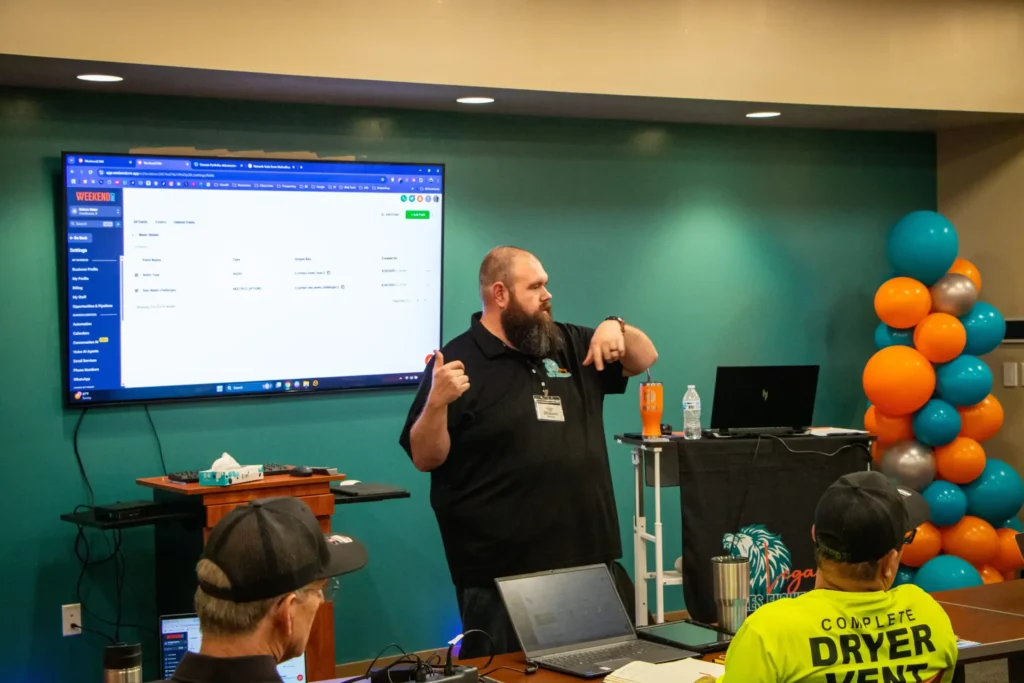
Is it leads, or is it the conversation?
Most owners call us about leads first. That is usually the wrong end of the problem.
Before you spend another dollar getting more people to raise their hand, look hard at what happens after someone already agreed to an appointment. That is the cheapest revenue you have, because you already paid for it.
Here is a test you can run this afternoon. Pull your last thirty quoted jobs and sort them by who ran the call. If one name sits far ahead of the rest, the process lives inside one person’s head.
If everyone is clustered low, the process itself is the problem. Either way, more leads just buys you more of the same result at a higher price.
Signals that show up in your numbers
01
Close rate holds on small tickets and falls apart above a certain dollar amount.
02
Discounts appear in the last five minutes of the visit instead of in the proposal.
03
Follow-up happens when somebody remembers, not on a rhythm anyone could describe.
04
You still have to ride along personally to rescue the jobs that matter.
05
Your bids get stacked against two others and win on price, not on the conversation.
06
One person closes far more than everyone else and nobody can explain why.

Signals that show up in the truck
Good technicians start avoiding the part of the visit where a recommendation gets made. They run the diagnostic, write the number, hand it over, and get back in the van. Nobody ever showed them what to do in between.
That is not a motivation problem, and a bonus plan will not touch it. It is a person who took this job to fix things and is now graded on something they were never taught.
What do all three programs teach?
Nobody wants to be sold to. Everybody wants to be understood, and the fastest way to understand somebody is to ask.
Shawn Derrick
Legacy Sales Engineering
Solution Based Questions
People believe what they say far more than what they are told. When a homeowner explains, in their own words, how long the problem has run, what they already tried, and what it is costing them, nobody has to argue about whether the work is needed.
The recommendation then lands as a report on what they described, not a position they have to defend themselves against. That takes the pressure out of the room and makes the price conversation shorter.
Stop Selling. Start Solving. is literal
If the honest recommendation is the repair instead of the replacement, or no work at all this year, that is the answer your person gives. Contractors who train this way stop dreading callbacks, because nothing was oversold in the first place.
The seven-step framework, the buyer types, and the question sets behind it are laid out on the team sales training page.
What do all three programs teach?
7
Steps in the framework
Questions do work a pitch cannot
People believe what they say far more than what they are told. When a homeowner explains, in their own words, how long the problem has run, what they already tried, and what it is costing them, nobody has to argue about whether the work is needed.
The recommendation then lands as a report on what they described, not a position they have to defend themselves against. That takes the pressure out of the room and makes the price conversation shorter.
Stop Selling. Start Solving. is literal
If the honest recommendation is the repair instead of the replacement, or no work at all this year, that is the answer your person gives. Contractors who train this way stop dreading callbacks, because nothing was oversold in the first place.
The seven-step framework, the buyer types, and the question sets behind it are laid out on the team sales training page.
Nobody wants to be sold to. Everybody wants to be understood, and the fastest way to understand somebody is to ask.
Shawn Derrick
Legacy Sales Engineering

How does a training engagement start?
Three steps, and the first one costs a phone call. No binder nobody opens, no certificate to renew. Pricing is quoted after the evaluation, once we know what the engagement actually needs.
Tell us where the deals stall
A short evaluation call. What you sell, who sells it, and where in the visit the conversation goes quiet. We are diagnosing, not pitching. You get our honest read whether or not you ever hire us.
We put you on the right track
Team training, coaching, an event session, or a combination if the situation calls for it. Then we rebuild the framework in the language of your trade: your services, your objections, your price points, your close.
We run reps until it holds
Role play and call review while the details are still fresh, because skills do not install in a ballroom. You keep the question sets, and the owner keeps a sequence they can teach the next hire.
What does it cost to leave it alone?
Nothing dramatic happens, and that is exactly the trap. The trucks still roll, the phone still rings, and the jobs you lose leave quietly without ever telling you why.
You paid for that lead either way. When the visit is untrained you pay and get nothing back, then shave the next quote to make up the gap. The margin that was going to buy a truck ends up funding a discount for a customer who would have paid full price.
The slower cost is what it does to your people. The owner stays the only reliable closer, so the owner never gets a weekend. And a sales process that lives in one head cannot be handed to anybody else.
What it looks like when it is working
Your estimators walk in with a sequence instead of nerves. Customers stop collecting three bids, because the conversation they had with your person was not the same as the other two.
Discounting drops because nobody needs it to save a call. Follow-up happens without you chasing anyone. And one day a job closes well and you find out about it afterward.
Where does training fit with the rest?
Training is not a lead machine
Sales training fixes what happens after the appointment is booked. It does not make the phone ring, it does not answer at seven at night, and it will not chase the estimate you sent last Tuesday.
Those are different jobs. If your close rate is fine and your calendar is empty, you have a marketing problem and should spend the money there first. We will tell you that on the evaluation call.
When the whole thing needs rebuilding
Some owners want the website, the search presence, the ads, the reviews, the CRM, the follow-up, the phones and the sales process treated as one system with one company accountable for it. That is the Full Stack.
Most engagements start smaller. Book the evaluation, tell us what is happening, and we will point at the one thing worth fixing first, whether that is team training, coaching, or something on the marketing side entirely.
Questions contractors ask before booking
Should I start with team training or one-on-one coaching?
If more than one person quotes work at your company, start with team training, because your real problem is that every person runs a different visit. If you are the only one selling, start one-on-one. When you genuinely cannot tell, book the evaluation and we will pick it with you.
Do I need a sales team before training is worth it?
No. Plenty of the work we do is with solo operators who built a business around a craft and then found that doing the work and selling the work are two different skills. One person changing one habit shows up in the next week of quotes.
What is Solution Based Questions?
It is the methodology every Legacy Sales Engineering program is built on. Instead of lines to say, it teaches a sequence of questions that gets the homeowner describing their own situation, so your recommendation is assembled out of what they just told you.
How much do the training programs cost?
Pricing depends on the program, the size of the group, and how much gets rebuilt in the language of your trade, so we quote it after the evaluation rather than posting a number that would be wrong for most people. The evaluation itself is free.
Can you train my team and handle our marketing at the same time?
Yes. A trained team with an empty calendar is just as stuck as a full calendar with an untrained team. Everything we do together is the Full Stack. If you only need one side of it right now, take one side of it right now.
Do you speak at association meetings and company events?
Yes. Shawn presents on in-home sales process, the Solution Based Questions methodology, and building a sales culture inside a trades business, in formats from a keynote slot to a working half day. Call (352) 612-3327 to check a date.
Find out where your consultations leak
Book a free sales evaluation. We look at what your people do in the visit right now, where the conversation breaks down, and what it would take to move the number
You will leave that call knowing which track fits, even if the honest answer is that you do not need us yet.
Or call (352) 612-3327 or email service@liftinglegacies.com. Stop Selling. Start Solving.