
One-on-one coaching / private sales coaching
One-on-one sales coaching, one person at a time
Nobody watches you sell. That is the whole problem. You go out, you present, you get a yes or a maybe, and then you drive to the next appointment carrying whatever went wrong into the next one. Coaching puts a second set of eyes on the part of your week nobody ever sees.
This is not a course you half watch at night. It is your calls, your trade, your prices and your objections, taken apart with somebody who has sat in that same chair for a quarter century.
No cost and no pressure. If team training or nothing at all is the better answer, you will hear that. Or call (352) 612-3327 and ask for Shawn.
One-on-one sales coaching from Legacy Sales Engineering is private work with founder Shawn Derrick. It is built for the owner who still closes everything himself, the solo seller with nobody to check their work, and the estimator who quotes plenty and signs little. You bring real appointments. Shawn brings 25 years of selling at the kitchen table and the Solution Based Questions method.
Is the whole close rate sitting on one person?
Ask most owners who their best closer is and they say their own name. That is a compliment and a ceiling in the same sentence.
It shows up the same way every time. The jobs you personally sit in front of get signed. The ones you hand off come back at a lower price, or they do not come back at all. So you keep the appointments, keep the truck, keep the evenings, and the company stops growing at exactly the width of your calendar.
Solo sellers hit the same wall from the other side. No ride-alongs, no second opinion, nobody to point out that you answered the price question before anyone asked it. You get better by guessing. Below are the signals that say the conversation is the constraint, not the lead count.
01You win on relationship, not process
People who already trust you sign. Homeowners who met you an hour ago do not. Referrals hide the gap for years. It is a process gap, and process can be taught.
02Price comes out before it is asked
The number arrives early because the silence feels uncomfortable. Once price leads, everything after it becomes a defence of the number instead of a conversation about the work.
03Every close ends in a discount
If coming down is the only lever you own, you are buying the sale out of your own margin. There are other levers. Most people were simply never shown where they are.
04You stop at let me think about it
It sounds polite, so it gets accepted at the door. It usually means something specific went unasked. The fix belongs forty minutes earlier in the appointment.
05Nobody has watched you sell in years
You have no feedback loop at all. Whatever habit crept in three years ago is still running, and from the inside it is invisible. That is not a character flaw. It is a blind spot.
What do we actually work on together?
We start with calls you already ran. Not a role play, not a made-up homeowner with a made-up budget. The last handful of real appointments, including the ones that went badly, because those are the ones with something useful inside them.
From there the work stays narrow on purpose. One habit at a time, in the order that moves your number fastest.
01
How you open, and what the first four minutes tell a homeowner about you
02
The Solution Based Questions that belong before price, and the ones you keep skipping
03
Reading which buyer type is sitting across from you, then changing pace to match
04
What you say, out loud, when somebody needs to think about it
05
Where your presentation loses the room, found by walking it back minute by minute
06
How to hold your price without turning the table into an argument
What do all three programs teach?
You do not need a better pitch. You need better questions, asked in the right order, by somebody who is not performing.
Shawn Derrick
Legacy Sales Engineering
A Coaching Approach Built Around You
Coaching does not hand you a new personality. A homeowner can hear it instantly when somebody is running borrowed lines, and it costs more trust than it ever wins. What changes is the order you work in and the questions you ask before you open the folder.
That is why this is private. The work is specific to how you already talk, what you already sell, and the exact spot where your appointments quietly stall.
Who is one-on-one coaching built for?
Three people book this, and one group should not. Read the four honestly and pick the one that sounds like your week.
Still the best closer you have
You built this by sitting in front of people, and you are still the only one who can be trusted to do it. Coaching gets what lives in your head into a sequence you can hand over, so the calendar stops being the ceiling.
Selling with nobody to check you
One truck, one calendar, every appointment yours. No sales manager, no ride-along, no second opinion on a call that went sideways. Coaching becomes the feedback loop you never had, pointed at the appointments you are running this week.
Quoting plenty, signing little
Volume is fine. Conversion is not. Usually the written quote is being asked to do work the conversation should have done first, so it gets read as a price instead of a plan. We fix the appointment, not the paperwork.
When coaching is the wrong call
If four people need the same fix, one at a time is the slow way to do it, and team training costs less per head. If the phone is not ringing at all, coaching will not solve that either. You will be told which one you actually have.
How does a coaching engagement start?
Three steps, and the first one costs nothing. You are never asked to buy before anyone has looked at how you sell.
The free evaluation
You talk through what you sell, how an appointment normally runs, and where it stops. No slide deck, no pressure. You leave with a straight read on whether one-on-one coaching is the right move, even when the answer is that it is not.
Your real calls, worked
We go through appointments you actually ran and find the precise place the conversation turned. Then you get the Solution Based Questions that belong in that spot, written in the language of your trade, and you go and run them.
You keep the process
The goal is that you stop needing a coach. The seven-step framework becomes yours: repeatable on a bad day, explainable to a nervous homeowner, and teachable to whoever you hire next year.
Who are you actually working with?
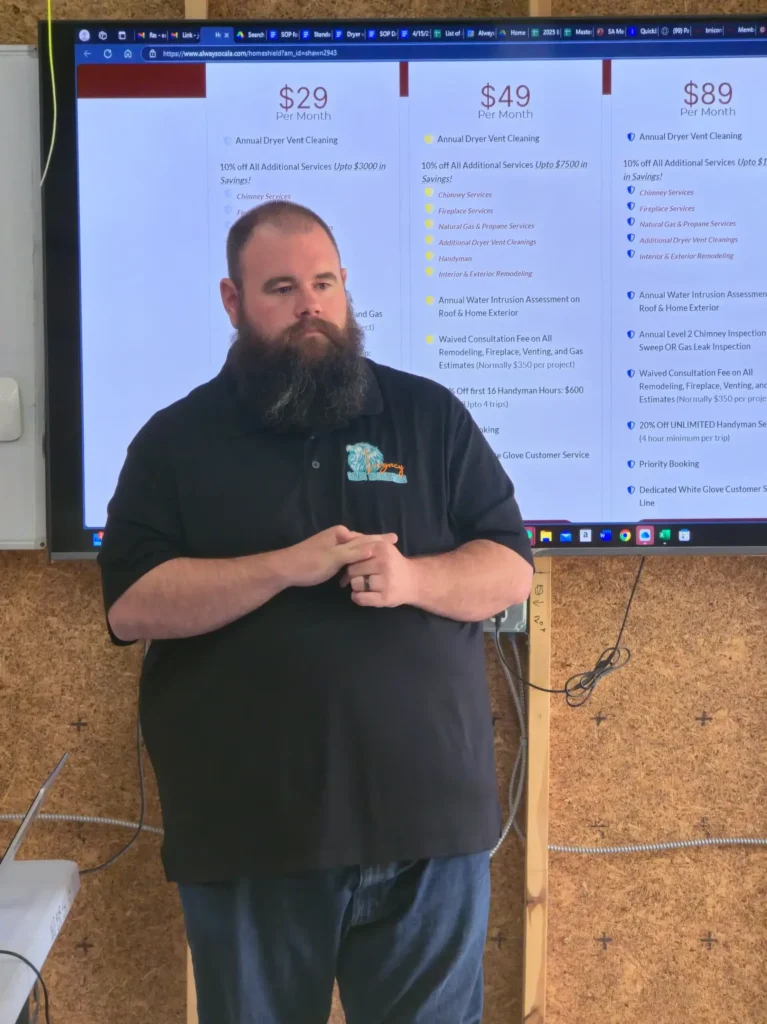
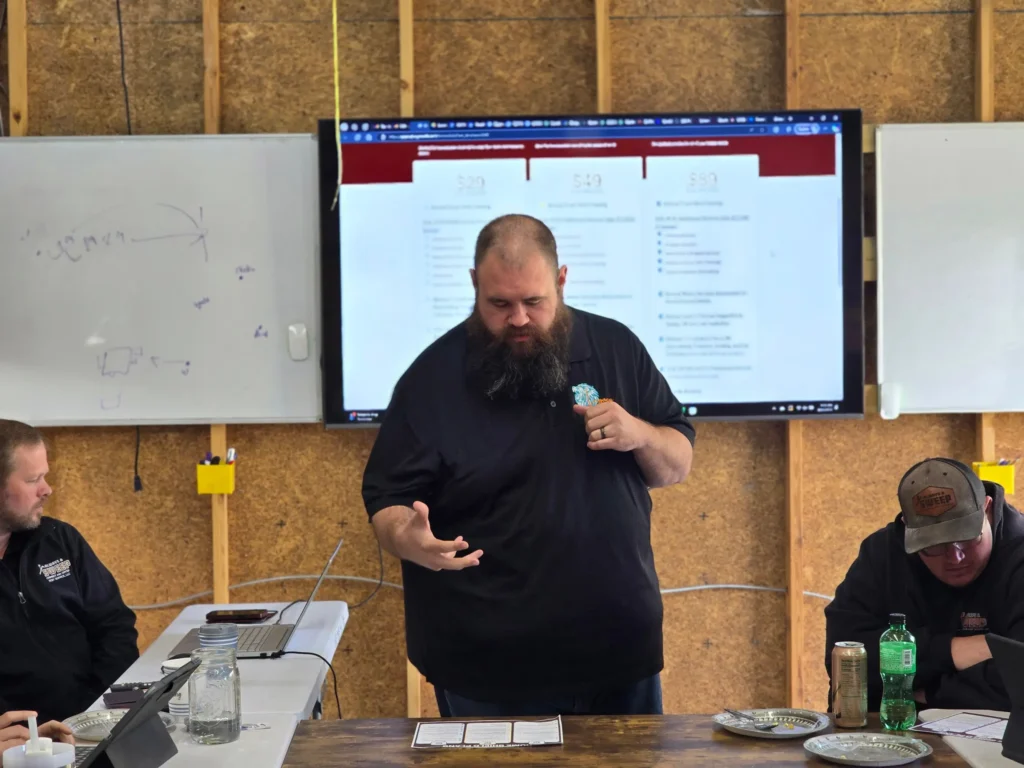
Shawn Derrick founded Legacy Sales Engineering after 25 years in sales, most of it spent in person, at the kitchen table, across from people spending their own money. Not a stage career. An actual seat in an actual living room, on nights when the answer was no.
That matters, because coaching is only worth anything if the person doing it has been stuck where you are stuck. Solution Based Questions came out of appointments Shawn ran himself. The seven-step framework is what he used to run them, and buyer types are how he decided which version of a question to ask.
He also runs the Legacy Builders Mastermind and led the complete rebrand of Always Fire and Gas, formerly Always A Sweep. The mission sits on all of it: Stop Selling. Start Solving.
Is coaching the right call, or is it training?
When one person is the constraint
One-on-one is the right shape when the gap is specific and personal. You know roughly where you lose people, or you know your number should be higher and cannot say why. A group session would spend most of its time on the parts you already do well.
It is also right when the person who needs the work is the owner. Nobody wants to be corrected in front of their own crew, and very little gets learned that way in any case. Private work removes the audience, so the honest conversation can happen.
When the whole team is the constraint
If three or four people are leaving money in the same place, train them together. Everyone runs the same sequence, everyone hears the same answer to the same objection, and it costs less per person. That is team sales training.
For a room that is not your own crew, a chapter meeting or an association event, look at keynote speaking. Still not sure which of the three fits? The training overview puts them side by side.
What does one-on-one coaching cost?
Coaching is quoted after the free evaluation, because what you need is not what the next person needs. There is no price on this page for that reason, and there will not be a number until Shawn understands what he is being asked to fix.
If you would rather hand sales and marketing over entirely instead of learning to run it yourself, that is The Full Stack, and it carries an open price. Coaching sits at the opposite end. You keep the skill, and it stays with you after the engagement ends.
Questions people ask before they book
What is one-on-one sales coaching?
It is private sales work between you and Shawn Derrick, built around the appointments you are already running. No class, no cohort, no fixed curriculum. You bring real calls and real objections, and the coaching aims at whatever is costing you signed work.
How is coaching different from sales training?
Team training gives a group one shared process. Coaching takes one person and works the specific habit holding their number down. Same methodology either way, Solution Based Questions and the seven-step framework, delivered to one person instead of a room.
Do you understand what I sell?
Shawn spent 25 years selling in person, most of it at the kitchen table, and Legacy Sales Engineering works with home service and contracting businesses. The questions get rewritten in the words of your trade. If your work sits genuinely outside that experience, you will hear it on the evaluation call.
How much does one-on-one coaching cost?
No set price is published, because the work is scoped to the person. Pricing is quoted after the free evaluation, once Shawn knows what you sell and what is actually going wrong. The evaluation itself costs nothing.
What if my problem is leads, not closing?
Then coaching is the wrong purchase, and you will be told so plainly. Sometimes the appointments are fine and the conversation is not. Sometimes it is the other way round. The evaluation exists to tell those two apart before you spend anything.
Can I bring one other person with me?
If two of you need the same fix, say so at the start and it can be scoped that way. Past a couple of people, the honest recommendation is usually team training, which covers everyone at once for less per head. Ask on the call and you will get a straight answer.
Ready to fix the part nobody sees?
Talk through what you sell and how the appointment usually goes, and you will get an honest read on whether one-on-one coaching is the right move for you. If it is not, you will be told what is.
or email service@liftinglegacies.com. Stop Selling. Start Solving.