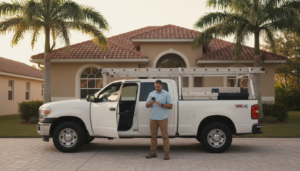

A solid lead engagement strategy simply means answering every call, text, and web form fast enough to beat the next contractor to the punch. For most home service businesses, that window is shrinking to minutes, not hours. Homeowners in Ocala, Tampa, Jacksonville, and Orlando don’t wait around — they call the next name on the list the moment yours goes to voicemail.
We’ve watched this play out with contractor clients across Central Florida: the crew with the better truck wraps and the nicer reviews still loses the job because the office didn’t pick up. That’s not a marketing problem. It’s a process problem, and it’s fixable. This guide walks through exactly what a working lead engagement strategy looks like, the tools that make it possible, and the mistakes that quietly bleed jobs out of your pipeline.
📌 Key Takeaways
- Responding within 5 minutes can dramatically outperform slower follow-up, according to industry research cited below.
- Missed calls, not bad leads, are the #1 silent killer of contractor pipelines.
- Instant lead engagement in Pasadena-style markets like Orlando and Tampa requires phones, texting, and CRM working together.
- A managed phone system or AI voice receptionist can catch the leads your office can’t answer live.
- Tracking response time weekly is the single best habit for improving close rates.
Jump to a section:
- What Lead Engagement Actually Means
- Why Speed to Lead Matters So Much
- Building Your Lead Engagement Strategy Step by Step
- Tools That Power Instant Lead Engagement
- Common Mistakes That Kill Lead Engagement
- FAQ
What Lead Engagement Actually Means
Quick Answer: Lead engagement is the process of responding to and nurturing every incoming inquiry until it becomes a booked appointment. It’s not just answering the phone — it’s what happens in the minutes and days after.
For a plumbing or roofing contractor, a "lead" isn’t just a phone call. It’s a missed call, a Google Business message, a Facebook form, a text from a truck decal, or a chat pop-up on your website. Each of these channels needs a plan, or leads quietly die in an inbox nobody checks.
Engagement vs. Generation
Lead generation gets the phone to ring. Lead engagement is what you do once it does. Many Florida contractors pour money into ads through their ad management campaigns but never fix the follow-up gap — which means every new lead is a leaky bucket. Fixing engagement first is usually cheaper than buying more leads.

Why Speed to Lead Matters So Much
Quick Answer: The faster you respond, the more likely you are to win the job — full stop. Homeowners comparing three contractors give the win to whoever calls back first, not necessarily the cheapest bid.
This is often called "speed to lead," a term for the elapsed time between when a prospect reaches out and when your team responds. According to the Federal Trade Commission, consumer complaints frequently cite unreturned calls and slow follow-up as top frustrations with local service businesses — a reputational risk on top of a lost sale.
The Cost of a Missed Call
Every unanswered call is a lead handed to a competitor. We’ve seen contractors in Jacksonville and Ocala lose two to three jobs a week simply because calls rolled to a full voicemail box during busy install days. That’s real revenue walking out the door before anyone on staff even knew a call came in.
⚠️ Common Mistake: Letting voicemail be your only backup plan. Most homeowners won’t leave one — they’ll just call the next contractor on the list.
Instant Lead Engagement in Growth Markets
Markets like Tampa and Orlando are competitive enough that instant lead engagement isn’t a luxury — it’s table stakes. If your office closes at 5 p.m. but leads come in at 7 p.m., you need a system that catches them anyway, whether that’s a managed phone line, text auto-response, or an AI voice receptionist built for contractors.
Building Your Lead Engagement Strategy Step by Step
Quick Answer: A working lead engagement strategy has three layers: instant acknowledgment, structured follow-up, and tracked accountability. Skip any one layer and leads slip through.
Here’s the sequence we walk contractor clients through, whether they’re based in Gainesville, Leesburg, or Daytona Beach:
- Capture every channel. Route calls, texts, web forms, and social messages into one place — usually a custom CRM built for your trade.
- Acknowledge within 5 minutes. Automated texts or a live answering service confirm you got the message, even before a human calls back.
- Call back within the hour. A real person should follow the automated touch with a genuine conversation and next steps.
- Schedule a second touch. If the lead doesn’t book, a follow-up text or call goes out within 24-48 hours.
- Track the numbers weekly. Response time and close rate get reviewed like any other KPI.
Why This Order Matters
Skipping straight to a phone call without acknowledgment feels slower to the homeowner, even if your team is fast. A quick automated text buys you time and signals you’re already on it — which lowers the odds they keep dialing around.
💡 Expert Insight: The contractors who win consistently treat lead engagement like a checklist, not a personality trait of whoever answers the phone that day.
Where a Sales-Engineered Website Fits In
Your website is often the first engagement touchpoint, not the last. A sales engineered website built with instant chat, click-to-call buttons, and clear scheduling forms shortens the entire chain before a phone even rings.

Tools That Power Instant Lead Engagement
Quick Answer: No single tool fixes lead engagement alone — it takes phones, CRM, and reputation systems working together. Most contractors already own pieces of this; they’re just not connected.
Phones and Messaging
A managed business phone system routes calls to whoever is available, logs missed calls automatically, and can trigger a text follow-up the second a call is dropped. This alone recovers jobs that used to vanish into voicemail.
CRM and Automation
A CRM built for contractors — not a generic sales tool — tracks every lead by source, stage, and response time. It should nudge your team when a lead has gone quiet for too long, the same way a jobsite foreman checks in on a stalled crew.
| Tool | What It Solves | Best For |
|---|---|---|
| Managed phone system | Missed calls, no after-hours coverage | Busy install/service days |
| AI voice receptionist | Calls outside business hours | Nights, weekends, storms |
| Custom CRM | Leads falling through the cracks | Multi-tech, multi-source teams |
| Reputation management | Slow review responses hurting trust | New market entry (e.g. Tampa) |
📊 Data Point: Research summarized by the Small Business Administration consistently links faster customer response times to higher win rates for local service businesses.
Reputation and Trust Signals
Engagement doesn’t stop at the first call. A prospect checking your reviews mid-decision is still "in the funnel." Reputation management keeps those signals fresh, especially in growth markets where homeowners compare three or four bids before calling anyone back.
Common Mistakes That Kill Lead Engagement
Quick Answer: Most engagement failures come from gaps, not bad intentions — a missed voicemail check, an untracked web form, or a follow-up that never happened. Fixing the gaps matters more than adding new lead sources.
Treating Every Lead the Same
An emergency water heater call needs a callback in minutes. A kitchen remodel inquiry has more breathing room. Contractors who use one response speed for every inquiry either burn out staff or lose urgent jobs.
No Second Touch
Most homeowners don’t book on the first conversation. If there’s no plan for touch two or three, that lead simply disappears. This is where automated CRM sequences earn their keep.
✅ Quick Tip: Set a rule that no lead goes more than 48 hours without a follow-up attempt, logged in your CRM, not memory.
Ignoring the Data
Without tracking response time, you’re guessing. Review your numbers monthly the same way you’d review job costing — if average response time creeps past 15 minutes, treat it as a red flag, not a footnote.
For licensing questions or compliance concerns tied to advertising and consumer response practices, Florida contractors can reference the Florida Department of Business and Professional Regulation for current requirements.
OPSDASH-IMG-3
Frequently Asked Questions
What is a lead engagement strategy for contractors?
It’s a documented process for responding to, following up with, and converting every inquiry that comes into a home service business, across phone, text, form, and social channels. Without a plan, leads default to whoever happens to answer the phone that day.
How fast should I respond to a new lead?
Aim to acknowledge a lead within 5 minutes and follow up personally within the hour. Studies referenced by groups like the National Association of Home Builders point to faster responses correlating with higher booking rates in home services.
What does instant lead engagement in Orlando or Tampa actually require?
It typically requires a managed phone system, text auto-responses, and a CRM that flags stalled leads — because in competitive markets, homeowners are usually calling two or three contractors at once. Without automation, a busy office simply can’t keep pace.
Can an AI voice receptionist replace my office staff?
Not entirely — it’s best used to catch calls after hours or during peak volume, then hand off to a real person for anything beyond scheduling basics. Most contractors we work with use it as a safety net, not a full replacement.
How do I know if my current lead engagement is failing?
Track your missed call percentage and average response time for two weeks. If either number surprises you, or if your close rate has quietly dropped, engagement gaps are the likely cause.
Does a CRM really improve lead engagement that much?
Yes — a CRM built for contractors centralizes every lead source and prevents follow-ups from relying on memory or sticky notes. It also gives you the data needed to spot where leads are stalling.
Is lead engagement different from lead generation?
Yes. Lead generation gets the phone to ring through ads, SEO, or referrals; lead engagement is what happens after that ring. Many contractors over-invest in generation while their engagement process quietly loses half the leads they’re already paying for.
Final Thoughts
A working lead engagement strategy isn’t complicated, but it does require discipline: fast acknowledgment, real follow-up, and honest tracking. Contractors in Ocala, Jacksonville, Tampa, and Orlando who fix this gap routinely book more jobs without spending another dollar on ads. The tools exist — managed phones, CRM, AI receptionists — but they only work if someone owns the process.
Next steps:
- Audit your missed-call rate over the last two weeks.
- Set a 5-minute acknowledgment rule for every new lead.
- Put a second-touch follow-up on the calendar for every unbooked inquiry.
- Review response-time data monthly with your team.
Ready to stop losing jobs to slower competitors? Contact Legacy Sales Engineering today to build a lead engagement strategy that actually books work.