Most contractors think a VoIP service is just "internet phones that break when the Wi-Fi goes out." That misconception costs jobs. A properly installed VoIP service runs over your internet connection but includes cellular failover, call forwarding to mobile devices, and call routing rules that a basic landline never offered. For a roofer in Jacksonville or an HVAC company in Ocala, the real question isn’t landline versus VoIP — it’s whether your phone system is actually set up to capture every lead call.
After 25 years selling water filtration, solar, windows, and remodels door-to-door, I learned one thing the hard way: the sale is lost the moment the phone rings twice and nobody picks up. Today’s homeowners don’t leave voicemails. They call the next name on the list. A reliable VoIP phone system, configured correctly, is one of the cheapest insurance policies a contractor can buy against that kind of lead leakage.
📌 Key Takeaways
- A modern VoIP service combines internet-based calling with cellular failover, so a weak connection doesn’t mean a dead phone line.
- Call routing, voicemail transcription, and texting from a business line are standard features most old-school phone companies never offered.
- According to the Federal Communications Commission, VoIP calls convert voice into digital data packets sent over broadband — understanding this helps explain both its strengths and its limits.
- Hurricane season in Florida makes backup power and mobile call forwarding non-negotiable for any contractor’s phone system.
- Pairing a VoIP service with call tracking and a CRM turns missed calls into a measurable part of your sales pipeline.
Table of Contents
- What Is a VoIP Service, Really?
- Why Contractors Lose Jobs Over Phone Problems
- VoIP vs Traditional Landlines for Home Service Businesses
- What to Look for in a VoIP Service Provider
- Setting Up VoIP for Storm Season Reliability
- Frequently Asked Questions
What Is a VoIP Service, Really?
VoIP stands for Voice over Internet Protocol — a system that converts your voice into digital data and sends it over an internet connection instead of copper phone lines. In plain terms, it’s a phone system that lives on the same network as your office Wi-Fi. The FCC’s consumer guide confirms this is now the dominant way small businesses handle calls, texts, and faxes.
How a Hosted VoIP Phone System Works
A hosted VoIP phone system means the equipment and software live with your provider, not in a closet at your shop. Calls route through the cloud, get distributed to the right crew member’s cell phone or desk extension, and get logged automatically. This matters for contractors in Orlando or Tampa juggling multiple trucks, because one main business number can ring five different phones in sequence until someone answers.

Common VoIP Terms Explained
A few terms show up constantly in sales pitches. "Hosted PBX" (Private Branch Exchange) just means your call-routing brain sits in the cloud rather than a physical box on-site. "Failover" means calls automatically reroute to a cell number if the internet drops. "SIP trunking" is the technical method that connects your VoIP service to the wider phone network — you don’t need to understand the plumbing, but you should know your provider handles it.
⚠️ Common Mistake: Switching to the cheapest VoIP service without checking cellular failover. When the internet goes down during a storm, calls just disappear instead of ringing a backup number.
Why Contractors Lose Jobs Over Phone Problems
Most lost jobs aren’t lost on the sales call — they’re lost before the call ever connects. A homeowner in Gainesville comparing three roofing quotes will call the first two numbers and book an estimate with whoever answers live. If your crew is on a roof and the office line rings to nothing, that lead is gone in under sixty seconds.
The Real Cost of a Missed Call
Industry call-tracking data consistently shows that home service businesses lose a meaningful share of inbound leads to no-answer calls, especially outside 9-to-5 hours. A VoIP service with smart call forwarding sends that same call to a service manager’s cell phone, then to voicemail-to-text, then logs it in your CRM so it never falls through the cracks. This is exactly the gap our lead engagement work is built to close for contractors.
💡 Expert Insight: The phone system isn’t just an IT tool — it’s the front door of your sales process. Treat it with the same seriousness you’d give a broken lead form on your website.
VoIP vs Traditional Landlines for Home Service Businesses
A quick comparison makes the practical differences obvious for contractors deciding between the two.
| Feature | Traditional Landline | Modern VoIP Service |
|---|---|---|
| Monthly cost | Higher, per-line pricing | Often lower, bundled per-user pricing |
| Call forwarding to mobile | Limited or manual | Built-in, automatic |
| Works during internet outage | Yes (copper line) | Only with cellular failover enabled |
| Voicemail-to-text | Rare | Standard |
| Multi-location routing | Difficult, extra hardware | Native cloud feature |
| Call recording for training | Add-on, costly | Usually included |
Landlines still have one edge: they run on the old copper network, so they keep working in a total power and internet failure. That’s exactly why failover planning matters so much for a hybrid VoIP phone system in Florida.
Texting and Reviews Tie Back to Your Phone Number
Many VoIP providers let you text from your main business line. That’s valuable because it keeps review requests and job confirmations flowing from one consistent number customers already recognize — which connects directly to reputation management and getting more Google reviews after every job.
What to Look for in a VoIP Service Provider
Not every provider built for office workers is built for a contracting business with crews on the road all day. Here’s what actually matters.
- Cellular failover built in — calls reroute automatically if internet drops.
- Call recording and voicemail transcription — useful for training new estimators.
- Simple multi-line routing — so one number can ring office staff, then a manager, then voicemail.
- Mobile app parity — your field team needs the same features on their phone as the office desk has.
- CRM integration — missed calls should log automatically, not rely on someone remembering to write it down.
Why Setup Matters More Than the Provider Name
I’ve seen contractors switch providers three times chasing a cheaper rate while the actual problem was that nobody configured call routing correctly the first time. A $30-a-month VoIP service, set up properly with failover and CRM logging, will outperform a $60-a-month system nobody bothered to configure. This is the same lesson that applies to a contractor’s website or SEO presence — the tool matters less than whether it’s set up to actually capture the lead.
📊 Data Point: According to Ready.gov’s business continuity guidance, losing communications during a disruption is one of the top reasons small businesses fail to reopen after a disaster — a direct argument for cellular failover on any phone system.
Setting Up VoIP for Storm Season Reliability
Florida contractors live with hurricane season every year, and phone outages during storms are predictable, not freak events. A VoIP service with a battery backup and automatic cellular failover keeps your office line reachable even when the power grid in Daytona Beach or Leesburg goes down for days.
A Simple Storm-Ready Checklist
Before the next named storm forms in the Gulf, confirm these basics with your provider: failover to a cell number is active, voicemail transcription emails your team in real time, and at least one admin can log into the call dashboard from a phone, not just a desktop. None of this is exotic technology — it’s standard on most modern hosted systems, but it only works if someone actually turns it on.
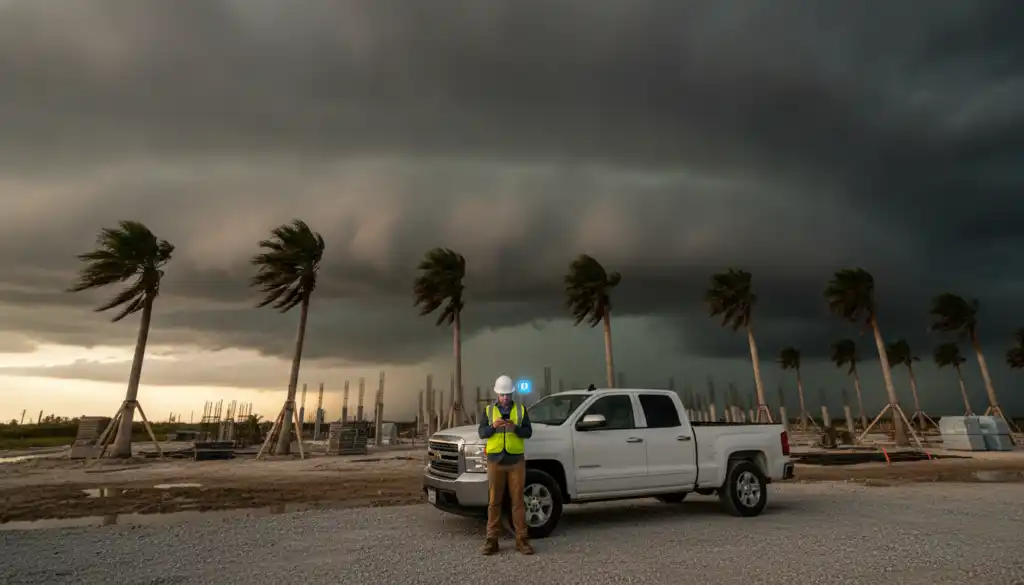
✅ Quick Tip: Test your failover now, not during an active storm warning. Call your own business number and unplug the router to confirm it reroutes correctly.
Frequently Asked Questions
Is a VoIP service reliable enough for a contracting business?
Yes, when it’s configured with cellular failover and a backup power source for your router. Most reliability complaints trace back to setup gaps, not the technology itself.
Does VoIP work during a power outage?
Only if your router has battery backup or the system fails over to cellular automatically. A standard copper landline will keep working without power, which is a genuine trade-off worth discussing with your provider.
How much does a VoIP phone system cost for a small contracting company?
Pricing usually runs per user per month and often undercuts traditional landline bundles, though exact rates vary by provider and feature set. Ask specifically about failover and CRM integration costs, since those are sometimes add-ons.
Can I keep my existing business phone number when switching to VoIP?
Almost always, yes. Number porting is a standard part of onboarding with nearly every reputable VoIP provider.
Do I need separate 911 setup for a VoIP phone system?
Yes — VoIP E911 registration requires you to confirm your physical address with the provider, since calls route differently than on a traditional landline. The FCC outlines these VoIP 911 requirements directly, and any provider worth using will walk you through it during setup.
Will switching to VoIP service hurt my Google Business Profile or map pack ranking?
No, as long as you keep your existing number through porting. Changing numbers without updating citations everywhere is what actually damages local rankings — see our Google Map Pack guide for the full checklist.
Is VoIP service worth it for a one-truck operation, or only larger contractors?
It’s arguably more valuable for a one-truck operation, since a single missed call represents a much bigger share of that week’s potential revenue. Call forwarding to your personal cell alone often justifies the switch.
Final Checklist Before You Switch
- Confirm cellular failover is included, not an upsell
- Port your existing number instead of changing it
- Register your physical address for E911 compliance
- Test voicemail-to-text and call recording before go-live
- Connect the system to your CRM so missed calls get follow-up
Switching phone systems feels like a hassle until the first storm season or busy Monday where a competitor’s crew answers the call you missed. A dependable VoIP service, set up with failover and proper call routing, protects the leads you’re already paying to generate through ads, SEO, and reviews. If you want help auditing your current setup or pairing it with our managed business phones service, reach out to Legacy Sales Engineering and we’ll walk through what’s actually happening on your lines.