One on one sales coaching is a personalized training relationship where a dedicated coach works directly with a single salesperson or technician to fix real weaknesses on real deals. Unlike a classroom seminar, it happens on live calls, in-home estimates, and follow-up scripts your team actually uses. For contractors in Ocala, Orlando, Tampa, and Jacksonville who lose bids to "I need to think about it," this kind of coaching closes the gap between knowing sales theory and actually closing the job.
Most home service owners have sent a tech to a two-day seminar, watched them nod along, and then seen zero change on the next estimate. That’s because generic training doesn’t touch the specific objection your guy fumbled last Tuesday. One-on-one coaching does.
📌 Key Takeaways
- One on one sales coaching pairs a single rep with a dedicated coach for live call reviews and field ride-alongs.
- It outperforms group sales training for skill retention because feedback is specific, not generalized.
- Home service businesses in Jacksonville, Ocala, Orlando, and Tampa see the fastest gains on high-ticket jobs like roofing, HVAC, and solar.
- A good coaching program includes scripts, role-play, and measurable close-rate tracking — not just motivational talk.
- Expect 60-90 days before close rates move meaningfully; anyone promising overnight results is overselling.
Jump to a section:
- What Is One-on-One Sales Coaching, and Why Does It Work?
- One-on-One Sales Coaching vs Group Sales Training
- What Happens Inside a Coaching Session
- Signs Your Contracting Business Needs Coaching
- How to Choose the Right Sales Coach
- What Results Contractors Can Expect
- FAQ
What Is One-on-One Sales Coaching, and Why Does It Work?
Quick Answer: One on one sales coaching is individualized skill-building where a coach reviews a rep’s actual calls or estimates and corrects specific habits in real time. It works because feedback is tied to that person’s tone, pace, and objection-handling — not a generic script.
Think of it like a golf lesson versus a golf book. Reading about a swing helps a little. Having a pro watch your actual swing and adjust your grip changes your score. Sales works the same way: a coach who hears your closer say "let me get you a quote" instead of asking for the job can fix that sentence on the spot.
The Coaching Relationship, Defined
A one to one sales coaching engagement usually runs weekly or biweekly. The coach listens to recorded calls, rides along on estimates, and assigns small, specific homework — like rehearsing a price objection three times before the next appointment.
💡 Expert Insight: The biggest lift usually isn’t closing technique — it’s the first 90 seconds of an estimate. Homeowners decide whether to trust you before you ever mention price.
One-on-One Sales Coaching vs Group Sales Training
Quick Answer: Group sales training is cheaper and good for onboarding basics, but one on one sales training produces bigger close-rate gains for experienced reps stuck at a plateau.
Both formats have a place. A new hire benefits from a group session that covers company scripts and product knowledge. A five-year tech who’s flatlined at a 35% close rate needs individual attention on the exact reason he’s losing deals.
| Factor | Group Sales Training | One-on-One Sales Coaching |
|---|---|---|
| Best for | New hires, onboarding basics | Experienced reps stuck on a plateau |
| Feedback | Generalized, one-size-fits-all | Specific to the individual’s calls |
| Cost per rep | Lower | Higher, but higher ROI on high-ticket jobs |
| Speed of change | Slow, inconsistent | Faster, measurable within weeks |
| Format | Classroom or webinar | Live calls, ride-alongs, role-play |
Why Contractors Lean Toward Individual Coaching
Home service sales cycles are short and high-stakes — one bad estimate can cost a $12,000 roof job. According to the U.S. Small Business Administration, businesses that invest in ongoing employee skill development see stronger retention and revenue growth than those that train once and stop. That logic applies directly to sales teams facing high-ticket objections every day.
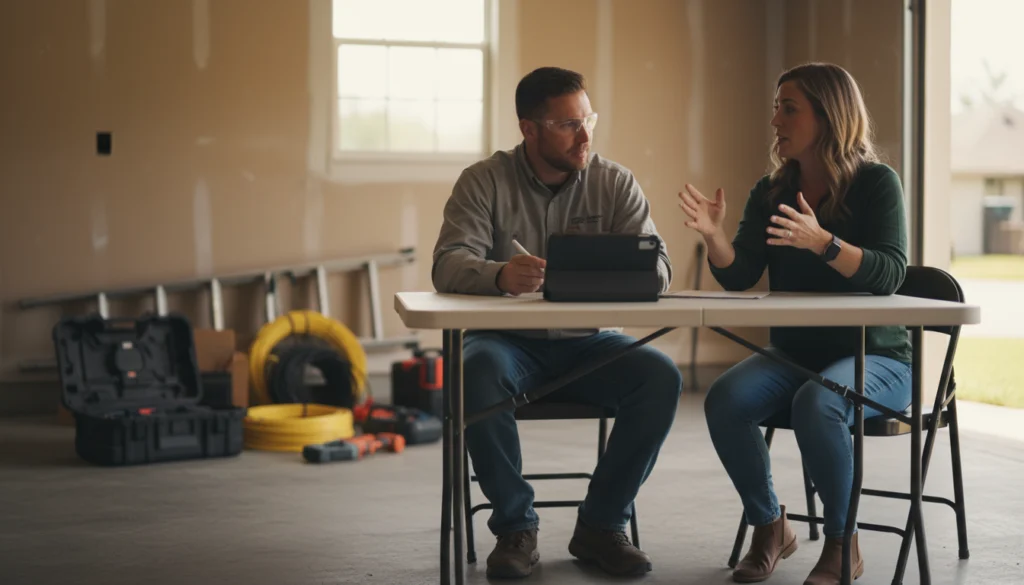
⚠️ Common Mistake: Sending an underperforming closer to another group seminar instead of diagnosing the specific habit that’s costing deals. Repetition of the same generic training rarely fixes a specific behavior gap.
What Happens Inside a One-on-One Sales Coaching Session
Quick Answer: A typical session reviews a recent call or estimate, isolates one or two specific moments that went wrong, and drills the correct response through role-play before the rep’s next appointment.
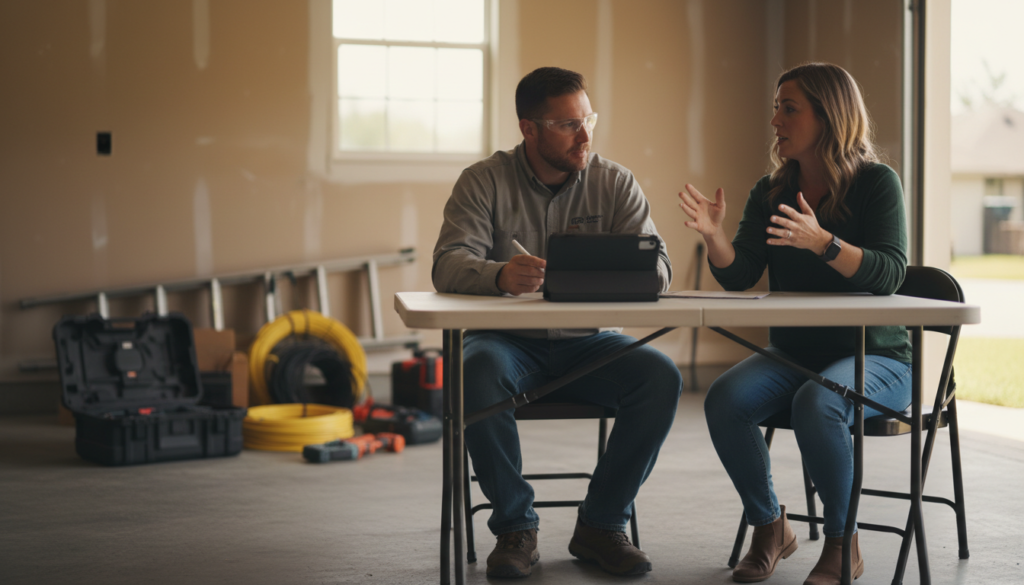
In practice, a session with a home service client often starts with a recorded estimate. The coach pauses at the moment the homeowner says "we’re getting other quotes" and asks the rep what he was thinking. That’s where real change starts — not in a workbook.
A Sample Coaching Cycle
- Coach reviews a recorded call or rides along on an in-home estimate.
- Coach and rep isolate the exact sentence or moment that lost momentum.
- Rep practices the corrected response through role-play, out loud, multiple times.
- Rep applies it on the next live appointment.
- Coach reviews results and adjusts the next week’s focus.
This cycle is why one-on-one sales coaching institute nearby searches spike among contractors — owners want a local, hands-on program, not a recorded video course they’ll never finish.
✅ Quick Tip: Record every estimate (with disclosure, per your state’s consent laws) so your coach has real material to work with instead of relying on your team’s memory of what happened.
Signs Your Contracting Business Needs One-on-One Sales Coaching
Quick Answer: If close rates have plateaued, your best tech can’t explain why he wins deals, or estimates routinely end in "I’ll think about it," your team likely needs individualized coaching rather than another group workshop.
Owners in Tampa and Orlando often tell us the same story: leads are flowing in from Google and referrals, but the close rate hasn’t moved in a year. That’s rarely a lead problem — it’s a conversation problem.
Three Warning Signs Owners Miss
- Inconsistent closers. One tech closes 50%, another closes 20%, and nobody can explain the gap.
- Price-first conversations. Reps lead with cost instead of building value, so every job turns into a price fight.
- No follow-up system. Estimates go cold because nobody circles back with a structured process.
📊 Data Point: According to the Bureau of Labor Statistics, sales roles with structured skill development and clear performance tracking consistently show stronger job growth and retention than unstructured roles — underscoring why ongoing coaching, not one-time training, moves the needle.
How to Choose the Right One-on-One Sales Coach
Quick Answer: Choose a coach who has actually sold home service jobs, uses recorded calls as evidence, and tracks close-rate data — not someone who only teaches motivational theory.
A lot of "sales coaches" online have never sold a roof, a generator, or an HVAC replacement. For contractors, real-world experience selling high-ticket, in-home jobs matters more than a certificate.
Questions to Ask Before You Hire a Coach
- Have you personally sold high-ticket home service jobs, and for how long?
- Do you review recorded calls or ride along on real estimates?
- How do you measure progress — close rate, average ticket, or both?
- What does a typical 90-day coaching plan look like?
- Can you show before-and-after close-rate data from a past client?
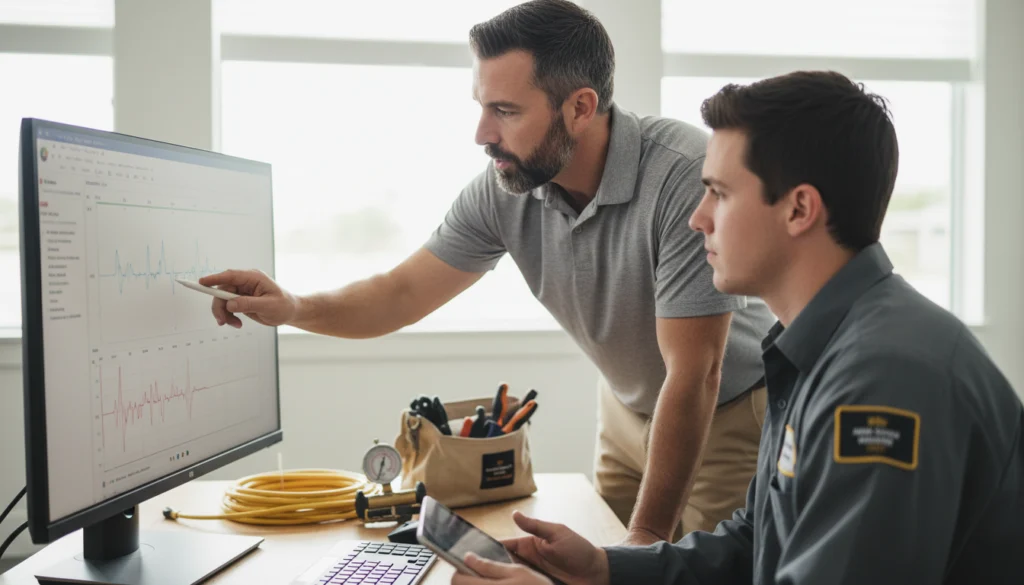
💡 Expert Insight: Ask for a sample coaching session before signing anything. A coach who can’t demonstrate live feedback on a real objection isn’t ready to coach your team.
What Results Can Contractors Expect
Quick Answer: Expect gradual, measurable improvement over 60-90 days — not overnight transformation. Reps typically improve confidence in the first two weeks and close rate over the following two months.
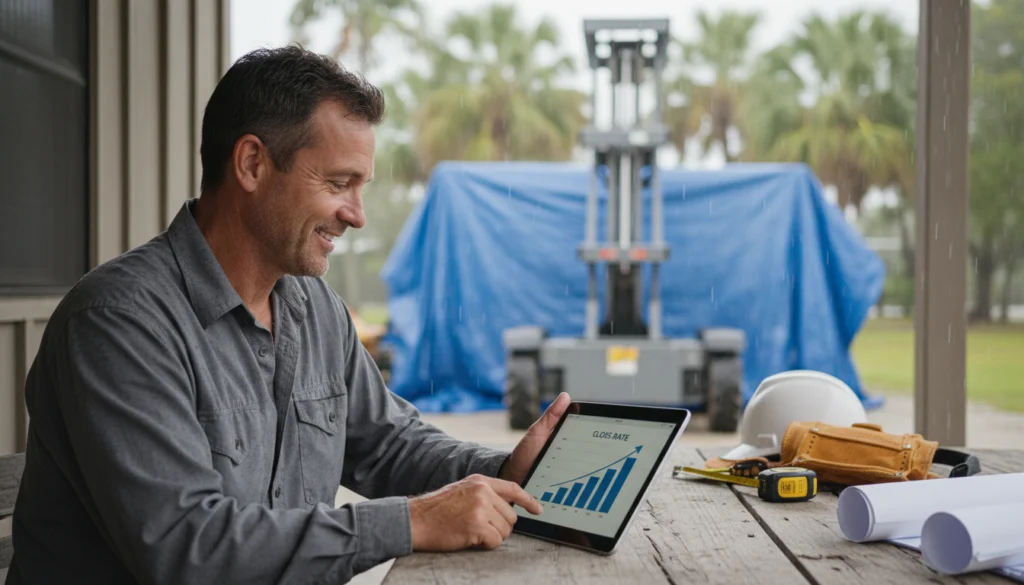
I’ve sat in on estimates where a tech’s close rate jumped from 30% to 45% in eight weeks, simply by fixing how he handled the "I need to talk to my spouse" objection. That’s a realistic, honest timeline — anyone promising a guaranteed overnight fix is selling hype, not coaching.
Setting Honest Expectations
Results vary by rep, market, and how consistently the homework gets done between sessions. A rep in Jacksonville selling roofing jobs and a rep in Gainesville selling generators will hit different milestones because their sales cycles differ. Coaching accelerates growth; it doesn’t replace a lead pipeline or fair pricing.
⚠️ Common Mistake: Judging a coaching program after two weeks. Behavior change in adults takes repetition — most owners see the real shift in month two or three.
One-on-one coaching also pairs well with a stronger lead pipeline. If your lead engagement process is weak, even a perfectly coached closer will run out of appointments to practice on. Likewise, a solid high-ticket home service sales strategy gives coaching something to reinforce rather than build from scratch.
FAQ
What is one on one sales coaching for contractors?
One on one sales coaching for contractors is individualized training where a coach reviews a specific rep’s real estimates and calls, then corrects habits that are costing closed jobs. It differs from group training because feedback is tailored to that person’s exact patterns.
How is one to one sales coaching different from a sales seminar?
A seminar teaches general concepts to a room of people at once, while one to one sales coaching focuses entirely on one rep’s specific calls, tone, and objections. Seminars build awareness; individual coaching builds measurable behavior change.
How much does one-on-one sales coaching cost for a small contracting company?
Costs vary by coach experience and session frequency, ranging from a few hundred to a few thousand dollars monthly per rep. Most owners in Ocala and Orlando treat it as an investment tied directly to closed-job revenue rather than a flat training expense.
How long does one on one sales coaching take to show results?
Most contractors see early confidence shifts within two weeks and measurable close-rate movement within 60-90 days. Results depend on how consistently the rep applies coaching homework between live appointments.
Can one-on-one sales coaching help a struggling closer, or should I just replace them?
Coaching often fixes a specific, identifiable habit — like weak follow-up or poor objection handling — faster and cheaper than hiring and retraining a replacement. Replacement makes sense only if the issue is attitude or ethics, not skill.
Is one on one sales coaching available near me in Florida?
Yes — contractors across Jacksonville, Ocala, Orlando, Tampa, Gainesville, and the surrounding Florida service area can access one on one sales coaching built specifically around home service selling. Sessions can happen in person or over recorded video review, depending on the market.
What’s the difference between sales coaching and sales training?
Sales training typically introduces new skills or scripts to a group, while one-on-one sales coaching reinforces and corrects those skills through live, individualized feedback. Most successful programs use training to build the foundation and coaching to make it stick.
Final Thoughts
One on one sales coaching isn’t a magic switch, but it’s the most reliable way to turn an average closer into a confident one. It works because it targets the exact sentence, tone, or hesitation costing your business a job — not a generic script every competitor already knows. Contractors across Jacksonville, Ocala, Orlando, and Tampa who commit to a 90-day coaching cycle consistently see stronger close rates and fewer stalled estimates.
Here’s how to get started:
- Record your team’s next five estimates or sales calls (with proper disclosure).
- Identify the one moment in each call where momentum was lost.
- Bring those recordings to a dedicated one-on-one sales coach for review.
- Set a 90-day close-rate benchmark and track it weekly.
- Reinforce coaching with a stronger sales training foundation for newer hires.
Ready to stop losing high-ticket jobs to hesitation and price objections? Schedule a one-on-one coaching session with Legacy Sales Engineering and start closing more of the estimates you already have.