One on one sales coaching San Diego contractors search for usually comes down to one problem: generic training doesn’t fix a specific weak spot in a specific salesperson’s pitch. A good coach watches how you actually sell, finds the exact moment you lose the close, and rebuilds that moment with you. Because it’s delivered virtually, the same personalized process works for a plumber in Ocala, a remodeler in Tampa, or a solar rep in San Diego.
After 25 years selling water filtration, solar, windows, and remodels, I’ve seen the same pattern everywhere: skilled tradesmen who can build or fix anything freeze up the moment a homeowner asks "so what’s this going to cost me?" One-on-one coaching exists to solve that exact freeze point, not to hand out another generic script.
📌 Key Takeaways
- One-on-one sales coaching fixes individual weak points that group training can’t reach.
- Sessions are virtual, so location — San Diego, Dallas, or Ocala — doesn’t limit access.
- Home service reps who get coached one-on-one typically shorten their sales cycle and raise average ticket.
- A real coaching program reviews recorded calls, not just slide decks.
- Legacy Sales Engineering pairs one-on-one coaching with lead generation and CRM systems so the leads you close actually stick.
In this article:
- What One-on-One Sales Coaching Actually Means
- Why Home Service Pros Need Personalized Coaching
- How Virtual Coaching Reaches Contractors Everywhere
- Inside a Real Coaching Session
- One-on-One Coaching vs Other Training Options
- Choosing the Right Coach for Your Trade
- FAQ
What One-on-One Sales Coaching Actually Means
Quick Answer: One-on-one sales coaching is a recurring, private session between a sales rep and a dedicated coach, built around that rep’s actual calls, not a generic script. It’s different from group training because every exercise targets one person’s habits.
The term gets thrown around loosely. Some companies call a weekly sales meeting "coaching." Real one-on-one sales coaching involves listening to or recording actual sales conversations, then breaking down where the rep hesitated, over-explained, or caved on price. According to the U.S. Small Business Administration, ongoing mentorship is one of the strongest predictors of small business survival past year five, and sales performance is no exception.
Why the "One-on-One" Part Matters
Group sales training teaches averages. A coach working one on one adjusts to your accent, your trade’s objections, and your personality. A quiet, methodical electrician doesn’t need the same close as a high-energy roofer.
💡 Expert Insight: The reps who improve fastest aren’t the most talented talkers — they’re the ones willing to listen back to their own sales calls and hear what the homeowner actually heard.
Why Home Service Pros Need Personalized Coaching
Quick Answer: Home service sales involve high-ticket decisions made inside someone’s living room, which means trust, pacing, and price presentation matter more than a memorized script. Generic sales training rarely covers that environment well.
A contractor selling a $14,000 roof or a $9,000 HVAC system isn’t selling the same way as a retail clerk. The homeowner is scared, comparing three quotes, and looking for a reason to say no. One to one sales coaching trains reps to read that fear and answer it directly instead of talking over it.
The Four Buyer Types Problem
Most reps pitch every homeowner the same way. We’ve written before about the four buyer types for contractors — analytical, driver, amiable, and expressive — and a coach helps a rep recognize which one is sitting across from them within the first five minutes.
⚠️ Common Mistake: Many contractors assume more product knowledge fixes a sales slump. It rarely does — the gap is almost always in how the price conversation is handled, not in technical knowledge.
What Changes After a Few Sessions
Reps typically report three shifts after eight to twelve weeks of one-on-one sales coaching: shorter sales cycles, fewer "I need to think about it" stalls, and a higher average ticket. None of that happens from a single weekend seminar.
📊 Data Point: The Bureau of Labor Statistics tracks sales occupations as one of the largest labor categories in the country, yet most sales reps receive less than a few hours of formal coaching per quarter — a gap one-on-one programs are built to close.
Contractors in Jacksonville and Orlando who’ve added structured sales coaching alongside our sales training for contractors program often see the biggest jump in close rate within the first quarter, simply because objections finally get handled instead of avoided.
How Virtual Coaching Reaches Contractors Everywhere
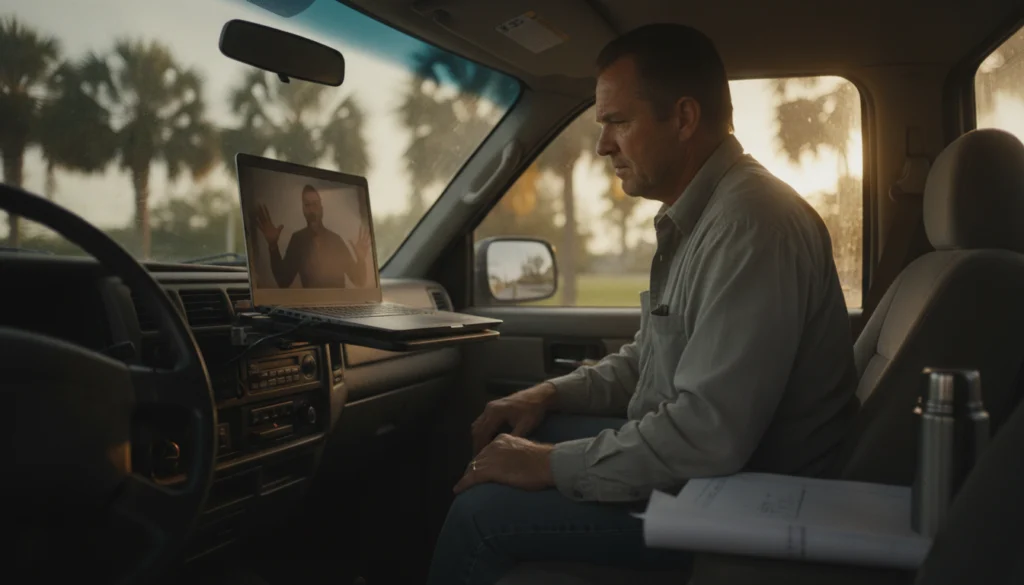
Quick Answer: Because sessions happen over video call and recorded-call review, location is no longer the barrier it used to be. A rep in San Diego, El Paso, Dallas, or Washington, D.C. gets the same structured process as one in Tampa or Ocala.
This matters because home service companies are rarely confined to one city. A franchise owner might have crews in Gainesville and Daytona Beach, or a solar company might be hiring reps outside Florida entirely. One-on-one coaching institute nearby searches assume you need a local office — you don’t. What you need is a coach who understands your trade and shows up consistently.
Why Virtual Doesn’t Mean Impersonal
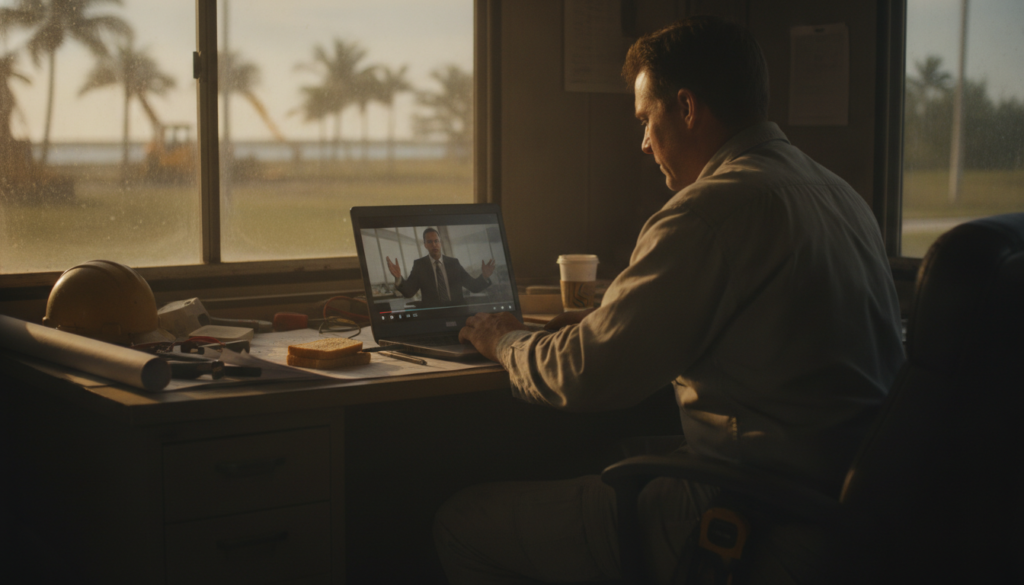
Some owners worry virtual coaching feels distant. In practice it’s the opposite: recorded calls, screen-shared CRM data, and scheduled accountability check-ins create more structure than an occasional in-person ride-along ever did.
✅ Quick Tip: Before hiring any coach, ask to see how they review a past client’s actual recorded sales call. If they can’t show you a real example, they’re selling theory, not coaching.
Where Legacy Sales Engineering Fits
Our own one-on-one coaching program pairs directly with the high-ticket home service sales framework we’ve refined since our owner’s early days selling water filtration systems door to door. The trade changes — windows, solar, remodels, HVAC — but the psychology of a nervous homeowner staring at a five-figure estimate stays remarkably consistent.
Inside a Real Coaching Session
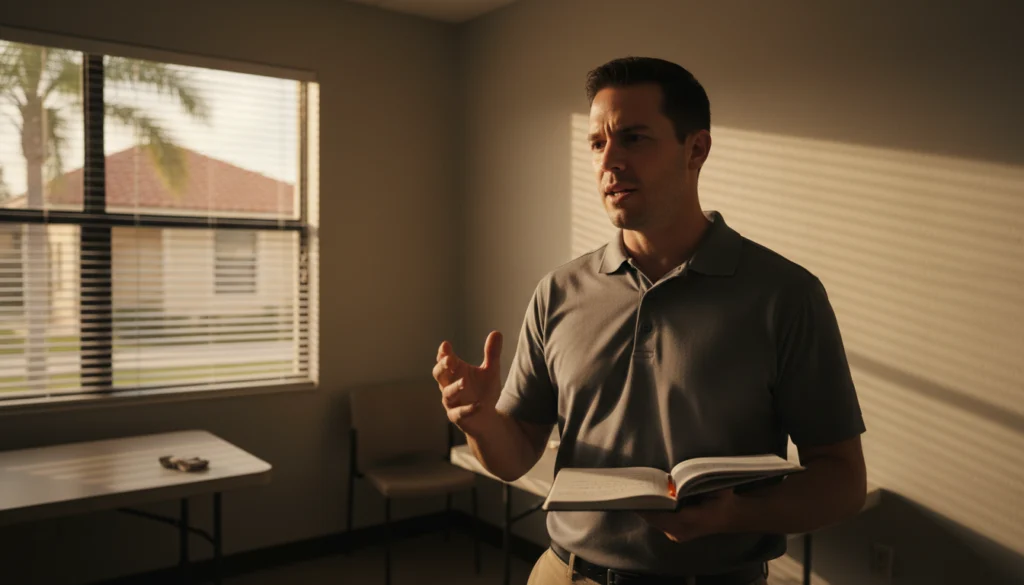
Quick Answer: A real session reviews a recent call, isolates one specific moment that went wrong, and rehearses a better version of that exact moment until it becomes natural.
Here’s roughly how a 45-minute session runs:
- Call review — the coach and rep listen to 5-10 minutes of a recent pitch together.
- Moment isolation — they pinpoint the exact sentence where the homeowner’s tone shifted.
- Rebuild and rehearse — the rep practices a revised response out loud, multiple times.
- Assignment — the rep commits to using the new line on the next three calls.
- Follow-up — the next session opens by reviewing whether the assignment worked.
Why Repetition Beats a Script Sheet
Handing someone a printed script rarely changes behavior under pressure. Repeating the correct response out loud, with feedback, rewires the automatic reaction — which is why one-on-one selling coaching outperforms a binder of talking points.
💡 Expert Insight: I tell every coaching client the same thing I learned selling solar and remodels for two decades — homeowners don’t resist price, they resist uncertainty. Fix the uncertainty and the price conversation gets dramatically easier.
One-on-One Coaching vs Other Training Options
Quick Answer: Group training, self-study, and one-on-one coaching each have a place, but only one-on-one coaching adjusts in real time to an individual rep’s specific habits and weak points.
| Training Format | Personalization | Accountability | Best For |
|---|---|---|---|
| One-on-one sales coaching | High — built around your real calls | Weekly check-ins | Reps stuck at a specific close rate plateau |
| Group workshops | Low — same content for everyone | Minimal after the event | New hires learning baseline fundamentals |
| Self-study (books, videos) | None | None | Reps who are already strong closers refining details |
| Ride-along mentoring | Medium — depends on the mentor’s skill | Inconsistent | Field-based trades with a strong senior rep available |
A Quick Cost-vs-Outcome Comparison
Owners often ask whether coaching pencils out against its cost. Consider average ticket impact alongside investment:
| Option | Typical Monthly Cost | Common Outcome |
|---|---|---|
| No formal coaching | $0 | Close rate stays flat or drifts down |
| Group seminar (annual) | Low, one-time | Short-term motivation bump, fades in weeks |
| One-on-one sales coaching | Moderate, recurring | Sustained close-rate and average-ticket gains |
⚠️ Common Mistake: Comparing coaching cost to "doing nothing" instead of comparing it to the revenue lost from stalled deals every single month.
Choosing the Right Coach for Your Trade
Quick Answer: Pick a coach who has sold your type of product, reviews real recorded calls, and connects coaching to your actual lead flow and CRM — not a motivational speaker with a generic deck.
A coach who has only sold software won’t fully understand why a homeowner hesitates over an HVAC comfort advisor’s recommendation, or how a roofing estimate conversation differs from a flooring consultation. Trade-specific experience shortens the learning curve dramatically.
Questions to Ask Before You Hire
- How many years have you coached home service or contractor sales specifically?
- Can I hear an anonymized recording of a past coaching call?
- How do sessions connect to our CRM and lead data?
- What does a typical 90-day improvement look like?
According to SCORE, a nonprofit business mentoring network, small businesses that pair mentoring with measurable goal tracking consistently outperform those that rely on ad hoc advice alone — the same logic applies directly to sales coaching engagements.
Coaching Works Best Paired With a Full System
Coaching alone fixes the conversation. It doesn’t fix a phone that rings and goes unanswered, or a Google Business Profile with three-star reviews. That’s why we built coaching to work alongside our managed business phones and reputation management services — a sharper closer still needs leads that actually reach a live, trusted conversation.
FAQ
What is one on one sales coaching san diego contractors use most?
Most San Diego-area contractors use virtual, video-based coaching that reviews actual recorded sales calls rather than generic in-person seminars. This format lets a coach anywhere work with a rep anywhere, which is why it’s become the standard choice.
How much does one-on-one sales coaching typically cost?
Pricing varies by program length and whether coaching includes CRM or lead-generation support, but most structured programs run as a recurring monthly investment rather than a one-time fee. Ask any coach for a breakdown tied to expected close-rate improvement before committing.
Is one-on-one sales coaching better than group training?
For an experienced rep stuck at a specific plateau, one-on-one coaching is generally more effective because it targets individual habits. Group training still has value for onboarding new hires on shared fundamentals.
How long before one-on-one sales coaching shows results?
Most contractors notice measurable changes in objection handling within four to six weeks, with close-rate and average-ticket gains becoming clearer over eight to twelve weeks. Results depend on how consistently the rep applies assignments between sessions.
Can one-on-one sales coaching work for a whole crew, not just one rep?
Yes — many home service companies in Tampa and Orlando run coaching on a rotating basis so every estimator eventually gets individual attention. It’s still delivered one rep at a time, which is what makes the feedback specific enough to stick.
Do I need to be in San Diego or Florida to use a virtual sales coach?
No. Virtual one-on-one coaching reaches reps in San Diego, Dallas, Atlanta, Washington D.C., and throughout Florida including Jacksonville and Ocala equally well, since sessions happen over video and recorded-call review rather than in person.
What’s the difference between one-on-one sales coaching and a sales coaching institute program?
An institute program often means a standardized curriculum delivered to many reps at once, sometimes with limited individual feedback. One-on-one coaching is a dedicated relationship built entirely around one person’s calls and goals.
Final Thoughts
One on one sales coaching San Diego reps and Florida tradesmen alike rely on works because it treats the sales conversation as a skill to be rebuilt, not a personality trait to hope for. The format travels well — virtual sessions, recorded call review, and steady accountability matter far more than a shared zip code. Pair that coaching with stronger lead flow and reputation systems, and the gains compound quickly.
Next steps:
- Record (with consent) your next three sales calls.
- Review them for the exact moment a homeowner’s tone shifts.
- Book a conversation about a one-on-one sales coaching program built around your trade.
- Pair coaching with your lead and reputation systems so closed deals actually show up on the books.
Ready to stop losing winnable estimates? Contact Legacy Sales Engineering today to schedule your first coaching session.