Contractor credibility is decided in about seven seconds — the time it takes a homeowner to glance at your website on their phone. If that page looks dated, vague, or unverifiable, they bounce to the next search result before you ever get a call. I’ve watched this happen to good contractors with twenty years of solid work behind them, simply because nobody ever fixed the digital first impression.
The good news: credibility signals are learnable, fixable, and don’t require a rebrand. Homeowners in Ocala, Tampa, Orlando, and Jacksonville are checking the same short list of things — license status, reviews, photos, and clarity about who you are. Get those right and the phone starts ringing with fewer price-shoppers and more ready-to-hire customers.
📌 Key Takeaways
- Homeowners decide if a contractor looks trustworthy within seconds of landing on the website.
- A visible license number and insurance mention are non-negotiable contractor credibility signals.
- Recent, responded-to Google reviews outweigh a high star rating with no recent activity.
- Real job photos beat stock images every single time, especially for remodeling and flooring work.
- A slow or confusing website quietly erases the trust your actual craftsmanship earned.
Jump to a section:
- Why Contractor Credibility Starts Online
- The Website Credibility Checklist
- Reviews and Reputation Signals That Matter
- Common Credibility Mistakes to Fix First
- FAQ: Contractor Credibility Questions
Why Contractor Credibility Starts Online
Quick Answer: Most homeowners research a contractor’s website and reviews before ever picking up the phone, so credibility is built or lost long before the first conversation. If your digital presence looks shaky, your reputation inherits that doubt regardless of your actual craftsmanship.
Twenty-five years ago, when I was selling water filtration systems door to door, credibility came from a firm handshake and a clean truck. Today it comes from what shows up on a screen. Homeowners in Gainesville or Leesburg can research five contractors before breakfast without leaving their kitchen table.
The Trust Gap Between Skilled Work and Visible Proof
A lot of contractors assume great work speaks for itself. It does — eventually, to the people who already hired you. New prospects have no reference point except what’s publicly visible. That gap between "I do excellent work" and "I can prove it online" is where jobs are lost to less-skilled competitors with better websites.
💡 Expert Insight: The contractors who win the most calls aren’t always the most talented — they’re the ones who made their credibility easy to verify in under a minute.
What "Credibility Signals" Actually Means
A credibility signal is any piece of information that lets a stranger confirm you’re legitimate without calling you first. Think license numbers, insurance disclosures, verified reviews, and real photos of completed jobs. According to the Florida Department of Business and Professional Regulation, consumers are encouraged to verify a contractor’s license before signing any agreement — which means your license number needs to be visible, not buried.
The Website Credibility Checklist
Quick Answer: A trustworthy contractor website shows license and insurance info, recent reviews, real project photos, clear service areas, and fast load times. Miss two or three of these and homeowners quietly move to the next tab.
Here is the practical checklist we run every client’s site against before launching an SEO or website-development campaign.
| Credibility Signal | Why It Matters | Where It Should Live |
|---|---|---|
| License number & insurance | Confirms legal legitimacy | Footer and About page |
| Recent Google reviews (last 90 days) | Shows you’re actively working | Homepage + dedicated page |
| Real job photos, not stock images | Proves the work is yours | Service pages, gallery |
| Named service area cities | Confirms you actually serve them | Homepage, footer |
| Fast mobile load speed | Keeps impatient visitors on-page | Site-wide |
| Clear phone number/contact form | Removes friction to reach you | Every page, above the fold |
Licensing and Insurance: The Non-Negotiables
No amount of design polish replaces a visible license number. Florida homeowners, especially in larger markets like Tampa and Orlando, have been burned before by unlicensed operators and now actively check. Put your license number in the footer of every page, not just a "contact us" form buried three clicks deep.
⚠️ Common Mistake: Hiding license and insurance details on a separate "About Us" page that nobody clicks. If it’s not visible from the homepage, most visitors assume it doesn’t exist.
Photos and Proof of Work
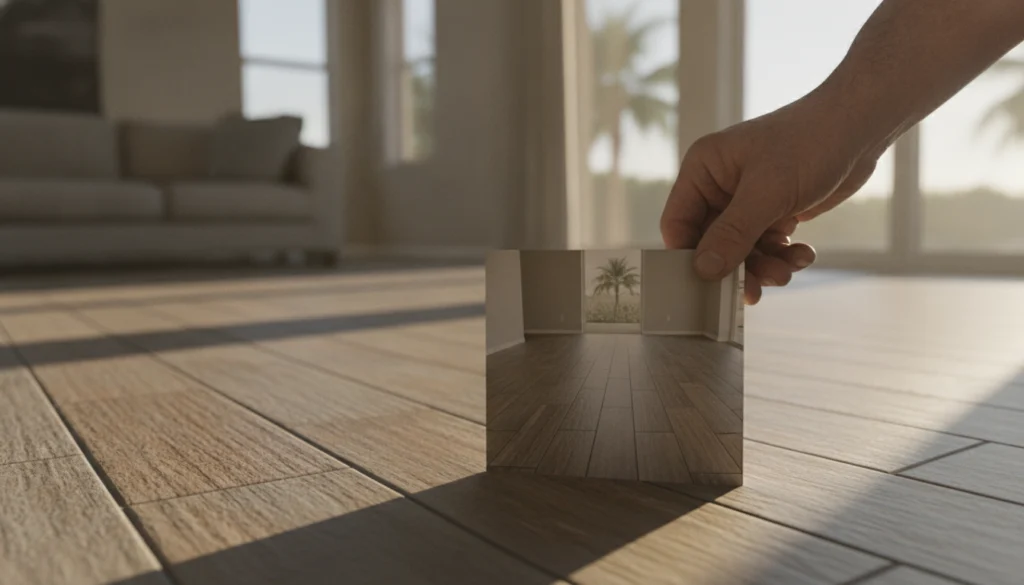
Stock photos are an instant credibility killer. A homeowner in Daytona Beach comparing two flooring contractors will trust the one showing their actual crew and actual kitchens over polished stock imagery every time. If you’re light on photography, start documenting the next ten jobs — it’s the cheapest trust-building investment available.
Reviews and Reputation Signals That Matter
Quick Answer: Recency and response rate matter more than raw star count. A 4.6-star profile with replies from last week beats a 5.0-star profile that hasn’t moved since 2022.
Review behavior has shifted. Homeowners don’t just scan the star average — they read the three most recent reviews and check whether the business replied. A thoughtful, professional response to a negative review often builds more trust than a stack of five-star silence.
How Often You Should Be Asking for Reviews
We coach clients to request a review within 24 hours of job completion, while satisfaction is highest. Waiting a week drops response rates significantly. Pair that habit with a simple reputation management process and review flow stays consistent instead of sporadic.
📊 Data Point: According to the Federal Trade Commission’s guidance on online reviews, businesses are legally required to avoid fake or incentivized reviews — a rule worth knowing before any review-generation campaign, since the penalties for violating it are real.
Responding to Negative Reviews Without Losing Credibility
Every contractor eventually gets an unfair review. How you respond matters more than the review itself. A calm, factual, non-defensive reply signals maturity to every future reader — not just the unhappy customer. We walk through this exact scripting inside our Google reviews guide for contractors.
✅ Quick Tip: Reply to every review, good or bad, within 48 hours. Silence on a bad review reads worse than the review itself.
Common Credibility Mistakes to Fix First
Quick Answer: The three fastest credibility killers are an outdated website, missing license info, and generic "we do it all" messaging with no specialization. Fix these before touching anything cosmetic.
I’ve sold water filtration, solar, windows and doors, and remodeling jobs over the years, and the objection pattern never changes: "How do I know you’ll actually show up and finish?" Credibility signals exist to answer that question before it’s ever asked out loud.
Generic Messaging Erodes Trust
A site that claims to do everything — roofing, HVAC, remodeling, pressure washing — reads as unfocused to a homeowner trying to solve one specific problem. Specialized positioning, like our flooring sales training or HVAC comfort advisor training clients use, signals expertise rather than desperation for any job that walks in.
Slow, Outdated Websites Undo Everything Else
A contractor can have perfect reviews and a license front and center, but a slow-loading, five-year-old website still kills trust. The Small Business Administration notes that a professional, up-to-date web presence remains a baseline expectation for consumer-facing businesses in 2026. Pair strong SEO with a modern website development foundation so the credibility signals you’ve built actually get seen.
Weak Follow-Up Kills Earned Trust
Even a credible-looking website falls apart if nobody answers the phone or returns a web form within hours. Fast, consistent lead engagement protects the trust your site just built. We cover this exact gap in our one-legger appointments breakdown and in the broader sales training for contractors program.
FAQ: Contractor Credibility Questions
What credibility signals should homeowners check before hiring a contractor?
Homeowners should check for a visible license number, proof of insurance, recent Google reviews, real job photos, and a clearly named service area. If two or more of these are missing or hard to find, treat it as a warning sign rather than an oversight.
How many Google reviews does a contractor need to look credible?
There’s no magic number, but 15-20 recent, detailed reviews with owner responses typically read as credible to most homeowners. Recency and response quality matter more than hitting a specific count.
Does a contractor’s website really affect whether people trust them?
Yes — a dated or confusing website undermines even excellent craftsmanship because it’s often the first and only impression a homeowner gets. Clear licensing info, real photos, and fast load times directly influence whether someone calls or clicks away.
What is a website credibility checklist and why does it matter for contractors?
A website credibility checklist is a short list of trust signals — license, insurance, reviews, photos, and service area — that homeowners scan before deciding to call. Contractors who meet every item on the checklist convert more website visitors into booked estimates.
How do Tampa or Orlando homeowners typically research a contractor before calling?
Most search Google, scan the top three to five map-pack results, check recent reviews, and glance at the website for licensing and photos — all within a couple of minutes. Contractors who rank well and look credible in that window get the call; the rest get skipped.
Can a small or newer contracting business still build strong credibility online?
Yes — credibility isn’t about company size, it’s about proof. A newer business with a clear license number, honest photos of its first completed jobs, and a few genuine reviews can look just as credible as a decades-old competitor.
What’s the fastest fix for a contractor with low website credibility right now?
Start by adding your license number and insurance information to the homepage footer, then request reviews from your last five completed jobs this week. Those two changes alone noticeably shift how trustworthy a site feels to a new visitor.
Final Thoughts on Building Contractor Credibility
Contractor credibility isn’t built with a slogan — it’s built with visible proof: a license number homeowners can verify, reviews that look current, photos that are actually yours, and a website fast enough to keep people on the page long enough to call. None of this requires reinventing your business, just making the trust you’ve already earned on the job site visible online.
- Add your license number and insurance details to every page footer this week.
- Request reviews from your last five completed jobs within 24 hours of finishing future work.
- Replace stock photography with real job photos on your top three service pages.
- Audit your website’s mobile load speed and fix the slowest pages first.
- Review your services overview to see where credibility gaps may be costing you booked calls.
If your website isn’t converting the trust you’ve earned on the job site into booked estimates, contact Legacy Sales Engineering and let’s fix the gap together.