
Selling to contractors is nothing like selling to a homeowner standing in their driveway. Contractors buy on margin, schedule risk, and trust built over years, not on emotion or curb appeal. If you’re a specialty trade, subcontractor, or supplier trying to land work from general contractors (GCs) or builders, you need a repeatable process — not a pitch you improvised last Tuesday.
I’ve spent about 25 years in direct sales, starting in water filtration, then solar, windows and doors, and residential remodels. The lesson that carried through every industry: buyers who buy for a living can smell a weak process in thirty seconds. This guide breaks down what actually works when the person across the table also sells things for a living.
📌 Key Takeaways
- Selling to contractors means selling on risk reduction, not emotion — lead with schedule reliability and proof.
- Identify which of the four buyer types you’re facing before you pitch price.
- Build a repeatable sales system ("the selling factory") instead of relying on one star closer.
- Specialty trades selling engineering services to GCs need technical proof points, not just testimonials.
- Florida trades in Jacksonville, Ocala, Orlando, and Tampa are seeing more B2B bidding competition — process wins deals now.
Jump to a section:
- Why Contractor Sales Are Different
- The Four Buyer Types on Every Jobsite
- Building the Selling Factory
- Selling Engineering Services to GCs
- Mistakes That Kill B2B Deals
- Winning Work Across Florida’s Growth Markets
- FAQ
Why Selling to Contractors Is Different
Quick Answer: Selling to contractors is a logic-first sale built on reliability, documentation, and relationships — homeowner sales lean more on trust and emotion in a single visit. Treat the two like separate disciplines, even if you serve both markets.
A homeowner usually makes one buying decision in a lifetime for a given project. A general contractor makes that same decision weekly, sometimes daily, across multiple jobs. That repetition changes everything about how you need to show up.
The Buyer Has Already Been Burned
Most GCs have a bad-sub story. Late materials, a blown inspection, a crew that ghosted mid-project. Your first job in a pitch is proving you’re not that story. Bring references, certificates of insurance, and a clear scope before they ask.
Price Is Rarely the First Filter
Contractors buying from other contractors weigh schedule risk heavier than price in most bids. According to the Associated General Contractors of America, schedule delays and subcontractor reliability remain top concerns cited across the commercial and residential building sectors. If you can prove you show up on time, price becomes a secondary conversation.
✅ Quick Tip: Lead your next pitch to a GC with your on-time completion rate, not your lowest price. It reframes the entire conversation.

The Four Buyer Types on Every Jobsite
Quick Answer: Every contractor you pitch falls into one of four decision-making styles — and pitching all four the same way is the fastest way to lose the bid.
We break this down in detail on our four buyer types page, but the short version matters here too. A numbers-driven estimator wants a spreadsheet. A relationship-driven owner wants a phone call and a handshake.
Reading the Room Before You Open Your Folder
Ask a few open questions before you present anything. "What went wrong with your last sub on a job like this?" tells you more than any brochure. Adjust your pitch structure to match what you hear back.
Why One Script Never Works Twice
A script built for an impatient GC falls flat with a cautious municipal buyer. Sales training for contractors exists precisely because reps need flexible frameworks, not memorized lines. Our sales training for contractors programs teach reps to diagnose buyer type inside the first five minutes.
💡 Expert Insight: The biggest shift I’ve seen trades make isn’t a new script — it’s learning to shut up and ask one more question before pitching.
Building the Selling Factory: A Repeatable System
Quick Answer: The Selling Factory is our term for a documented, repeatable sales process that doesn’t live only in one closer’s head. It’s what turns occasional contractor-to-contractor wins into predictable pipeline.
Most trade businesses have a sales process that only works because one person is naturally good at it. That’s fragile. When that person leaves, the pipeline leaves with them.
Documenting the Steps That Actually Work
Write down every step from first contact to signed scope: qualifying questions, proof documents, follow-up cadence, and objection responses. This is the backbone of high-ticket home service sales work we do with trade clients across Florida.
Training the Whole Team to Run It
Once the process is written down, it can be taught. One-on-one sessions help reps internalize it faster than a group webinar ever will — see our one-on-one coaching approach for how we run this with individual estimators and account managers.
| Approach | Relies On | Scalability | Risk If Rep Leaves |
|---|---|---|---|
| Lone star closer | One person’s instinct | Low | High — pipeline stalls |
| The Selling Factory system | Documented steps, trained team | High | Low — process survives turnover |
| No process at all | Luck and relationships | Very low | Immediate drop in deals |
⚠️ Common Mistake: Treating sales training as a one-time event. According to the U.S. Small Business Administration, ongoing sales process refinement correlates with stronger year-over-year revenue retention for small contractors.
Selling Engineering Services and Specialty Trades to GCs
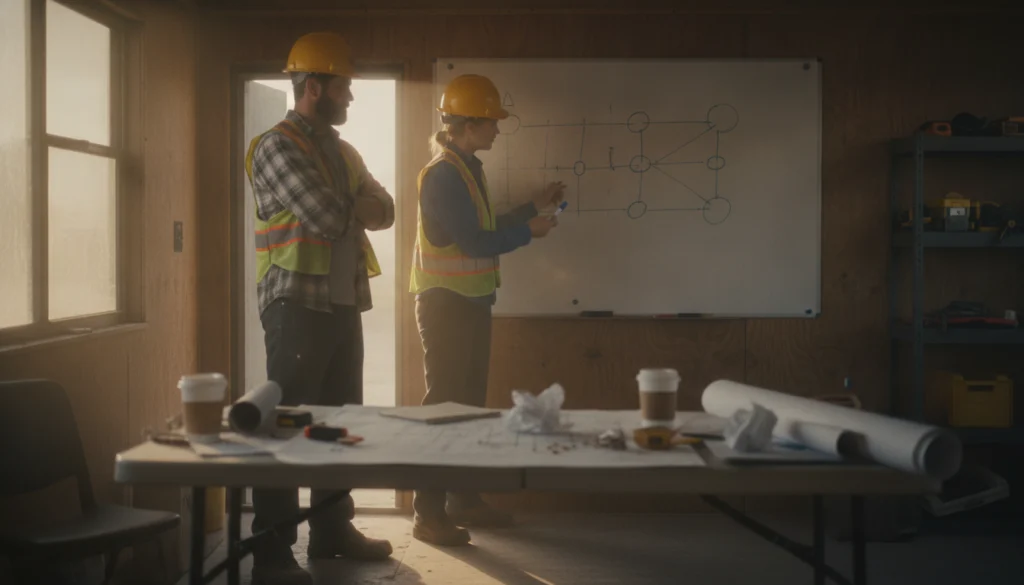
Quick Answer: Selling engineering services or specialty trade work to general contractors demands technical proof — code compliance, licensing, and documented performance data — before relationship-building even starts.
If you’re an electrical, flooring, or mechanical specialty contractor bidding into larger commercial or residential projects, GCs expect paperwork fluency as table stakes.
Technical Credibility Comes First
A GC vetting a specialty sub checks licensing status before anything else. Confirm your status is current through the Florida Department of Business and Professional Regulation, and keep documentation ready to hand over, not promised "next week."
Safety Compliance Closes More Bids Than You’d Think
Jobsite safety records increasingly factor into subcontractor selection. The Occupational Safety and Health Administration publishes incident reporting guidance that larger GCs now reference when qualifying subs. A clean record, shown proactively, removes an objection before it’s spoken.
Pricing Technical Work Without Underselling It
Specialty trades often underprice engineering-heavy scopes because they’re afraid of losing the bid. Price the engineering, documentation, and warranty work separately from labor so the GC sees the value breakdown, not just one lump number.
📊 Data Point: The National Association of Home Builders has reported ongoing skilled-trade labor shortages, which gives well-documented, reliable specialty subs more negotiating leverage on price than in past cycles.
Common Mistakes That Kill Contractor-to-Contractor Deals
Quick Answer: Most lost B2B bids trace back to slow follow-up, missing documentation, or pitching price before trust — not to the quality of the actual work.
These mistakes repeat across industries, whether it’s flooring, electrical, pressure washing, or chimney work.
Mistake One: Following Up Too Slowly
GCs juggle a dozen subs at once. If you take three days to answer a bid question, someone faster gets the job. Fast, documented communication is a competitive edge, not a nice-to-have.
Mistake Two: No Online Proof of Reliability
Contractors research each other online before a first meeting now. If your reviews are thin or outdated, it costs you credibility before you ever speak. Our reputation management services help trades keep that proof current and visible.
| Mistake | Why It Costs Deals | Fix |
|---|---|---|
| Slow bid follow-up | Competitor answers first | Set a 4-hour response standard |
| Thin online reviews | GC can’t verify reliability | Run ongoing reputation management |
| No documented scope | Looks unprepared | Standardize a proposal template |
| One-size pitch | Misses buyer type | Train reps on buyer diagnosis |
✅ Quick Tip: Audit your last five lost bids. If three or more stalled on response time, that’s your process fix, not your pricing fix.
Winning Work Across Florida’s Growth Markets
Quick Answer: Jacksonville, Ocala, Orlando, and Tampa are seeing faster growth in commercial and residential B2B trade work, which means more contractors competing for the same GC relationships.
Local reputation moves faster than a logo or a flashy truck wrap in these markets.
Why Local Presence Still Wins Bids
A GC in Orlando or Tampa will usually ask peers about a sub before signing. Being visible in local search and on Google reviews backs up what your rep says in the room — see our guide on Google reviews for contractors for how to build that proof.
Smaller Markets Reward Relationship Density
In Ocala, Gainesville, or Leesburg, the GC community is smaller and word travels fast. One strong reference in Marion or Alachua County can open three more doors within months — in some cases faster than in larger metros like Jacksonville or Tampa.
💡 Expert Insight: In smaller Florida counties, I’ve seen one well-documented win turn into a referral chain that outperformed an entire ad budget.
Frequently Asked Questions
What does "selling to contractors" actually mean in the trades?
It means pitching your product or service to another contractor or builder, rather than to a homeowner, where the buyer evaluates reliability, documentation, and schedule risk ahead of price.
How is selling to contractors different from retail or residential sales?
Contractors buy repeatedly and professionally, so they filter out weak sales processes almost instantly, while homeowners often make a one-time decision influenced more by trust and presentation.
What is "the selling factory" approach Legacy Sales Engineering uses?
It’s a documented, repeatable sales process — covering qualifying questions, proof materials, and follow-up cadence — built so an entire team can execute consistently, not just one top performer.
How do I start selling engineering services to general contractors in Florida?
Start with current licensing through the Florida DBPR, a clean safety record, and a documented scope template, then layer in relationship-building once the technical proof is in place.
Do contractors in Jacksonville and Orlando really check online reviews before hiring subs?
Yes — GCs in growth markets like Jacksonville and Orlando increasingly research subcontractors online before a first call, making active reputation management part of the sales process itself.
What’s the biggest mistake trades make when selling to contractors?
Slow follow-up on bid questions is the most common deal-killer, often outweighing price or even workmanship concerns in the GC’s final decision.
Can sales training really improve contractor-to-contractor close rates?
Yes — structured training that teaches reps to diagnose buyer type and standardize follow-up typically improves close rates more than pricing adjustments alone, according to practitioners across the home service sales field.
Final Thoughts
Selling to contractors rewards process over charisma. The trades that win repeat B2B work document their steps, prove reliability fast, and train every rep to run the same playbook. That’s true whether you’re bidding a flooring scope in Tampa or an electrical package in Ocala.
Next steps:
- Audit your last ten contractor bids and flag where follow-up slowed down.
- Map which of the four buyer types each lost bid represented.
- Document your current sales steps into one repeatable template.
- Strengthen your online reputation before your next big bid goes out.
- Book a call to build your own selling factory with a trained team behind it.
Ready to stop losing bids to faster-moving competitors? Contact Legacy Sales Engineering to build a documented, trainable process for selling to contractors across Florida’s fastest-growing trade markets.