Contractor sales training is the difference between a free estimate that goes nowhere and a signed contract on the kitchen table tonight. Most contractors can talk shop all day but freeze up the moment a homeowner says "let me think about it." The fix isn’t a better pitch deck — it’s structured, repeatable sales training built for the trades.
If you’re an HVAC installer, remodeler, flooring crew, or pool builder in Florida, you already know the product. What’s missing is a process for guiding a homeowner from "just looking" to "where do I sign." That’s what this guide covers, step by step.
📌 Key Takeaways
- Contractor sales training works best when it’s one-on-one, not a generic webinar.
- Homeowners buy trust first, product second — your framework needs to build both.
- Financing conversations need their own script; vague pricing kills deals.
- Generational differences (Boomer vs. Millennial buyers) change how you should present.
- Role-play and ride-alongs beat PowerPoint every time.
Table of Contents
- What Is Contractor Sales Training?
- Why Generic Sales Advice Fails Contractors
- The Core Framework for In-Home Sales
- Handling Financing Conversations the Right Way
- Selling Across Generations
- One-on-One Coaching vs. Group Training
- FAQ
What Is Contractor Sales Training?
Quick Answer: Contractor sales training teaches tradesmen and estimators a repeatable process for building trust, presenting price, and closing the job — without feeling pushy. It’s different from retail or B2B sales training because the sale almost always happens inside the customer’s home.
I spent roughly 25 years selling water filtration, solar, windows and doors, and residential remodels before coaching contractors full-time. The pattern never changes: the tech is good, the close is weak. Homeowners don’t reject you because your price is too high — they reject you because they don’t trust the process enough to say yes on the spot.
Why In-Home Selling Is Its Own Skill
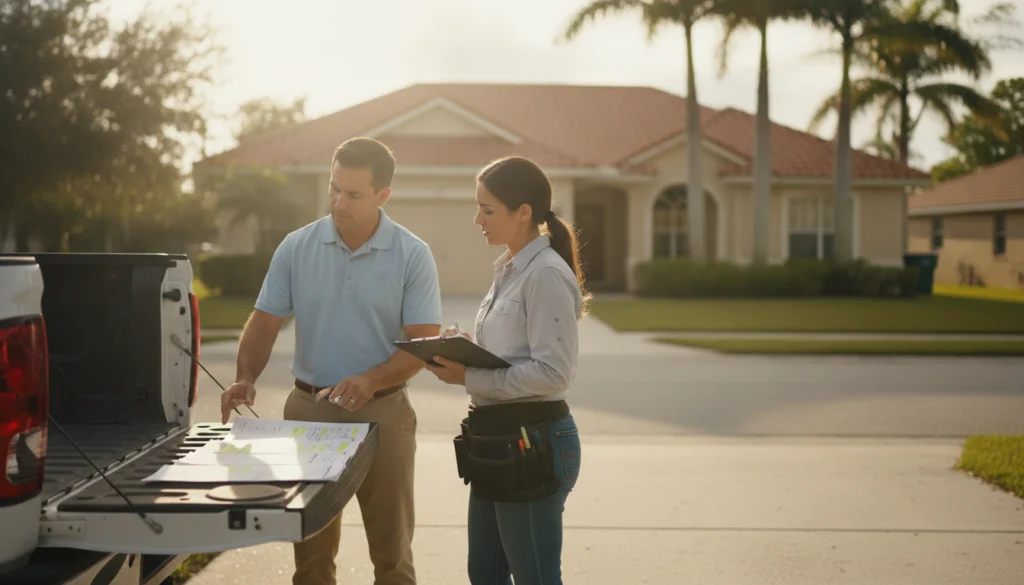
In-home sales training differs from showroom or phone sales because you’re a guest in someone’s house, often with their spouse watching and a dog barking in the background. You have to read the room, manage distractions, and still land the numbers conversation. Generic sales training for builders rarely accounts for that pressure.
✅ Quick Tip: Before you even open your estimate folder, ask one open-ended question about the home. It resets the energy from "salesperson" to "advisor."
Why Generic Sales Advice Fails Contractors
Quick Answer: Most sales training is built for software or insurance reps, not tradesmen standing in a garage explaining a $14,000 HVAC system. Contractors need scripts built around measurements, code requirements, and financing — not cold-call tactics.
Sales training for contractors has to speak trade language. A flooring estimator and a pressure washing tech face completely different objections, yet both need the same underlying structure: discover the pain, present the fix, remove the risk, ask for the signature.
The Trust Gap Homeowners Feel
According to the Consumer Financial Protection Bureau, homeowners frequently delay large purchases because they feel pressured or confused by financing terms. That hesitation isn’t about your product — it’s about unclear communication. Construction sales training that skips financing clarity leaves money on the table every single estimate.
⚠️ Common Mistake: Walking a homeowner through specs for 20 minutes before ever mentioning price range. By the time numbers come up, they’ve mentally checked out.
We see this constantly with contractors in Jacksonville and Orlando who are great technicians but lose the room during the pricing reveal. The fix isn’t charisma — it’s sequencing.
The Core Framework for In-Home Sales
Quick Answer: A reliable in-home sales training framework has four stages: rapport, discovery, presentation, and commitment. Skipping any stage — especially discovery — is why estimates stall.
- Rapport (2-3 minutes): Earn permission to be in the home as an advisor, not a vendor.
- Discovery (5-10 minutes): Ask about pain points, timeline, and budget range before pulling out a tape measure.
- Presentation (10-15 minutes): Tie the solution directly back to what they told you in discovery.
- Commitment (5 minutes): Ask for the decision directly — "Does this work for you today?" — instead of leaving a quote behind.
Why Most Estimators Skip Discovery
Most contractors skip discovery because it feels slower than jumping to the pitch. In reality, a tight five-minute discovery conversation cuts your close time nearly in half because you’re no longer guessing what matters to the buyer.
💡 Expert Insight: The best closers I’ve trained ask more questions than they answer during the first ten minutes. Silence is a selling tool, not dead air.
| Sales Stage | Goal | Common Mistake |
|---|---|---|
| Rapport | Build trust fast | Rushing straight to product |
| Discovery | Uncover real motivation | Asking yes/no questions only |
| Presentation | Match solution to pain | Reciting specs, not benefits |
| Commitment | Get a clear decision | Leaving a quote "to think about" |
Handling Financing Conversations the Right Way
Quick Answer: Contractor sales training for financing means presenting monthly payment options early, clearly, and without pressure — so cost never becomes the surprise that kills the close.
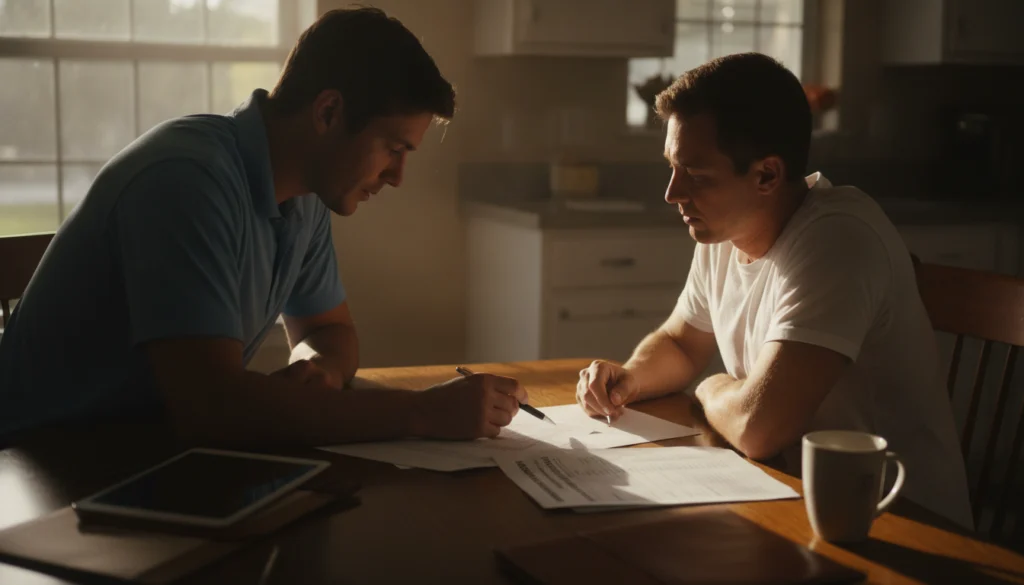
Florida homeowners in Ocala, Tampa, and Gainesville routinely finance remodels, HVAC replacements, and pool installs. If your reps only discuss cash price, you’re losing qualified buyers who simply need a payment plan explained in plain language.
Staying Compliant While You Sell
The Federal Trade Commission enforces rules around in-home sales disclosures, including the three-day Cooling-Off Rule for certain door-to-door transactions. Training your team on these basics protects your business and builds credibility with cautious buyers.
📊 Data Point: Industry surveys consistently show financing availability — not just price — as a top factor in whether a homeowner moves forward with a remodeling project.
Selling Across Generations
Quick Answer: Generational sales training matters because a 68-year-old homeowner and a 34-year-old first-time buyer make decisions differently — one wants reassurance, the other wants speed and data.
Boomer homeowners often want a slower, relationship-driven conversation with printed materials and references. Younger buyers in Orlando and Tampa frequently research online first and expect a fast, transparent quote with digital payment options ready to go.
Reading the Room Before You Pitch
A contractor who uses the same script for every age group is leaving deals on the table. Adjust your pace, your proof points, and even your follow-up method — text for younger clients, a phone call for older ones.
✅ Quick Tip: Ask early how they’d like to receive the written estimate — email, text, or paper. It signals respect and often reveals their decision-making style.
One-on-One Coaching vs. Group Training
Quick Answer: One-on-one sales training outperforms group seminars for contractors because it targets your specific objections, your specific trade, and your specific weak points — not a generic script.
Group workshops are useful for exposing a whole team to shared language. But one-to-one sales training is where real behavior change happens, because a coach can listen to your actual calls and correct habits in real time.
What Ride-Along Coaching Looks Like
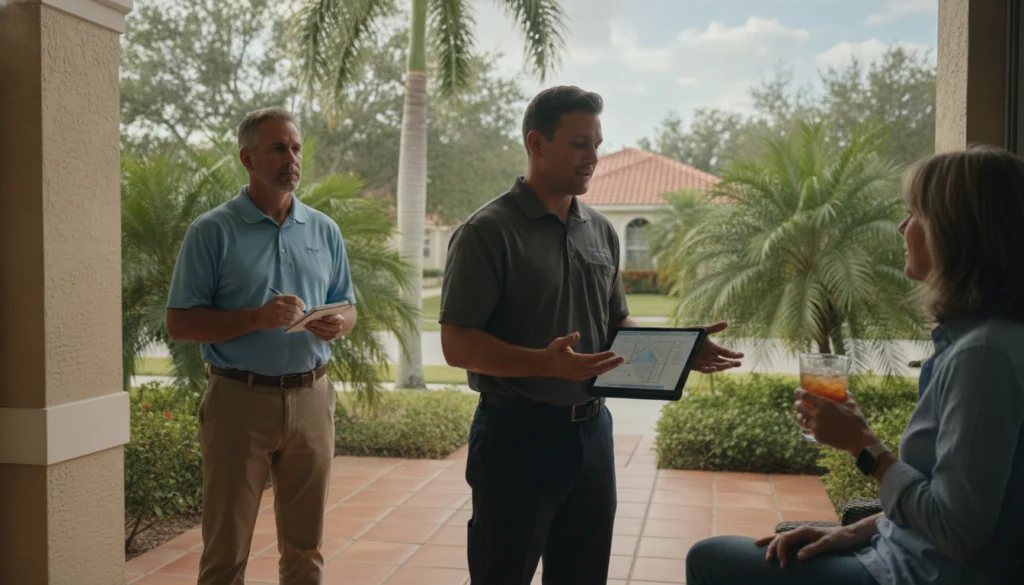
In practice, this means a coach joins an estimate, takes notes, and debriefs immediately after. According to the Bureau of Labor Statistics, construction and skilled trades remain among the fastest-growing employment sectors in Florida — which means more competition for every homeowner’s attention. One-on-one coaching is how established contractors stay ahead of newer competitors entering Gainesville, Jacksonville, and Daytona Beach markets.
| Training Type | Best For | Limitation |
|---|---|---|
| Group Workshop | New hire onboarding, shared language | Doesn’t fix individual habits |
| One-on-One Coaching | Experienced reps stuck at a plateau | Requires more scheduling time |
| Self-Paced Scripts | Quick reference, consistency | No live feedback |
💡 Expert Insight: I’ve coached reps who doubled their close rate in 90 days simply by fixing how they transitioned from presentation to price — nothing else changed.
If your team is ready for structured coaching, explore one-on-one sales coaching built specifically for home service reps, or browse the full sales training programs available by trade. For a deeper look at buyer psychology, read about the four buyer types contractors meet in the field and how to adjust your pitch for each one.
FAQ
What does contractor sales training actually teach?
Contractor sales training teaches a repeatable process for building trust, presenting pricing, and asking for the decision during an in-home estimate. It typically covers discovery questions, objection handling, and financing presentation specific to home services.
How long does sales training for contractors usually take?
Most programs run four to eight weeks of structured coaching, often paired with live ride-alongs. One-on-one formats can move faster since the coaching targets specific habits rather than a broad curriculum.
Is one-on-one sales training worth it for a small contracting crew?
Yes — smaller crews often see faster results because coaching time isn’t split across a large group. A single rep improving their close rate by even 10% can significantly change monthly revenue for a small operation.
Does sales training help with financing objections?
Yes, dedicated contractor sales training for financing teaches reps to present payment options early and clearly, which reduces the "let me think about it" response tied to sticker shock.
What’s the difference between home service sales training and general sales training?
Home service sales training focuses on in-home dynamics, trade-specific objections, and financing conversations unique to contracting, while general sales training is often built for retail or B2B environments.
Can sales training work for remodeling and construction crews differently than HVAC or flooring?
The core framework stays the same, but remodeling sales training usually involves longer sales cycles and multiple decision-makers, while HVAC or flooring sales often close in a single visit.
Where can Florida contractors get hands-on sales coaching?
Contractors in Jacksonville, Ocala, Orlando, Tampa, and surrounding Florida counties can access one-on-one coaching through Legacy Sales Engineering’s contractor sales training programs tailored to specific trades.
Final Thoughts
Contractor sales training isn’t about turning tradesmen into pushy salespeople — it’s about giving skilled technicians a clear path from estimate to signed job. The framework is simple: build trust, ask real questions, present with purpose, and ask for the decision directly. Contractors across Jacksonville, Ocala, Orlando, and Tampa who commit to structured coaching consistently close more of the estimates they already earn.
Next steps:
- Audit your last five lost estimates and identify where the conversation stalled.
- Decide whether your team needs group onboarding or focused one-on-one coaching.
- Build a simple financing script so price never derails a strong presentation.
- Schedule a coaching session to road-test the framework on a real estimate.
Ready to stop losing winnable jobs? Contact Legacy Sales Engineering today to book a one-on-one contractor sales training session built around your trade.